 CANASA Member
 5-Year Warranty
Choosing the Right Operation
The way your roll-up shutter opens and closes affects daily convenience, security, and long-term cost. Each operation type has clear advantages depending on your application, budget, and preferences.
Manual Strap Operation
The simplest and most affordable option. A woven strap winds around a spool inside the wall, and you pull the strap to raise or lower the shutter.
- Lowest cost — no electrical work required
- No power dependency — operates during outages
- Best for smaller shutters (up to ~8 feet wide)
- Requires physical effort — not ideal for large or frequently operated shutters
Manual Crank Operation
A geared crank handle provides mechanical advantage, making it easier to operate larger shutters than a strap system. The crank mounts at a comfortable height beside the opening.
- Easier than strap for medium-sized shutters
- No electricity required
- Removable crank handle can be stored for security
- Slower operation than motorized — not ideal for high-frequency use
Motorized (Tubular Motor)
A tubular motor inside the barrel drives the shutter electrically. Operated via wall switch, remote control, or both. This is our most popular option for residential installations.
Modern tubular motors are quiet, reliable, and include soft-start and soft-stop to reduce wear on the shutter curtain.
- One-touch operation from a wall switch or remote
- Quiet operation — minimal noise during cycling
- Programmable limit switches ensure precise stop positions
- Requires electrical connection (110V standard)
- Optional battery backup for power outage operation
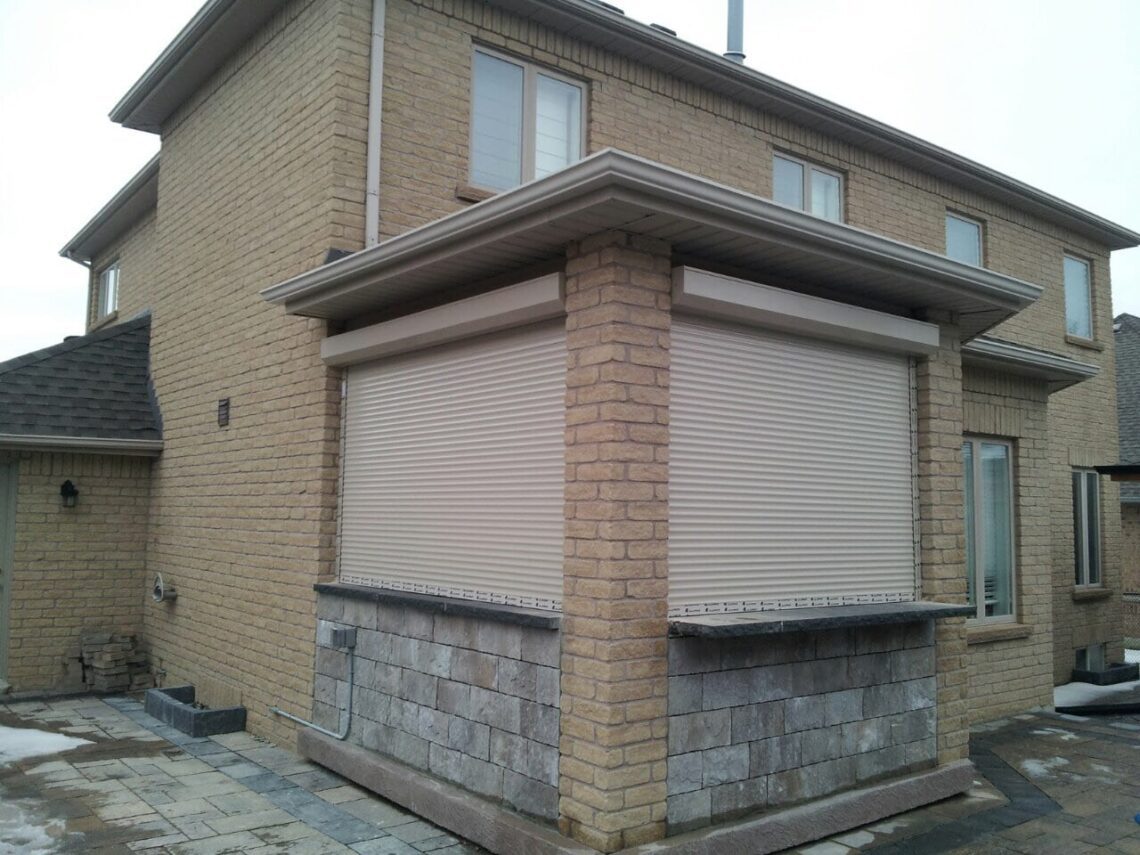
Solar-Powered Motor
A solar panel charges an internal battery that powers the tubular motor. Ideal for locations without convenient electrical access — boathouses, gazebos, sheds, and detached structures.
The solar panel mounts above the barrel housing and is barely visible. Battery capacity supports 10+ full cycles per day even on cloudy days.
Smart-Home Integration
Motorized shutters can integrate with home automation systems. Options include:
- Wi-Fi controllers — operate from your smartphone anywhere in the world
- Timer programming — automatic open at sunrise, close at sunset
- Scene integration — include shutters in "leaving home" or "goodnight" routines
- Voice control — compatible with Alexa, Google Home, and Apple HomeKit via bridge
- Sensor triggers — auto-close on wind, rain, or security alarm events
Which Should You Choose?
For most residential applications, we recommend motorized operation. The convenience pays for itself quickly, and the reliability of modern tubular motors means virtually zero maintenance.
Manual operation makes sense for budget-conscious projects, small shutters, or locations where electrical access is impractical and solar isn't viable. Contact us for a recommendation based on your specific situation.