
Metal Privacy Screens
Rigid privacy and separation for patios, side yards, utility zones, and exterior spaces that need a permanent architectural screen.
 CANASA Member
 5-Year Warranty
When privacy needs to stay in place
Some spaces need privacy all the time: between neighboring properties, around a service area, beside a patio, or around equipment that should be screened more cleanly.
Metal privacy screens provide fixed separation, cleaner lines, and a more architectural look while helping define the space in a controlled way.
- Side-yard and lot-line privacy issues
- Patios or outdoor rooms that need a fixed visual break
- Equipment or service areas that should be screened from view
- Spaces that need a more rigid and permanent divider
What metal privacy screens are built to do
Metal privacy screens are rigid panel systems used to block direct sightlines, create fixed separation, and shape exterior spaces. They suit applications where the screen should stay in place and become part of the layout.
Their value is in structure, stability, privacy, and appearance. They define space visually while still fitting into a broader exterior protection or screening plan.
- Permanent privacy with a cleaner architectural presence
- More structure and definition than a soft screen
- Useful around patios, side yards, equipment zones, and property transitions
- Can complement gates, fencing, and enclosures on the same site
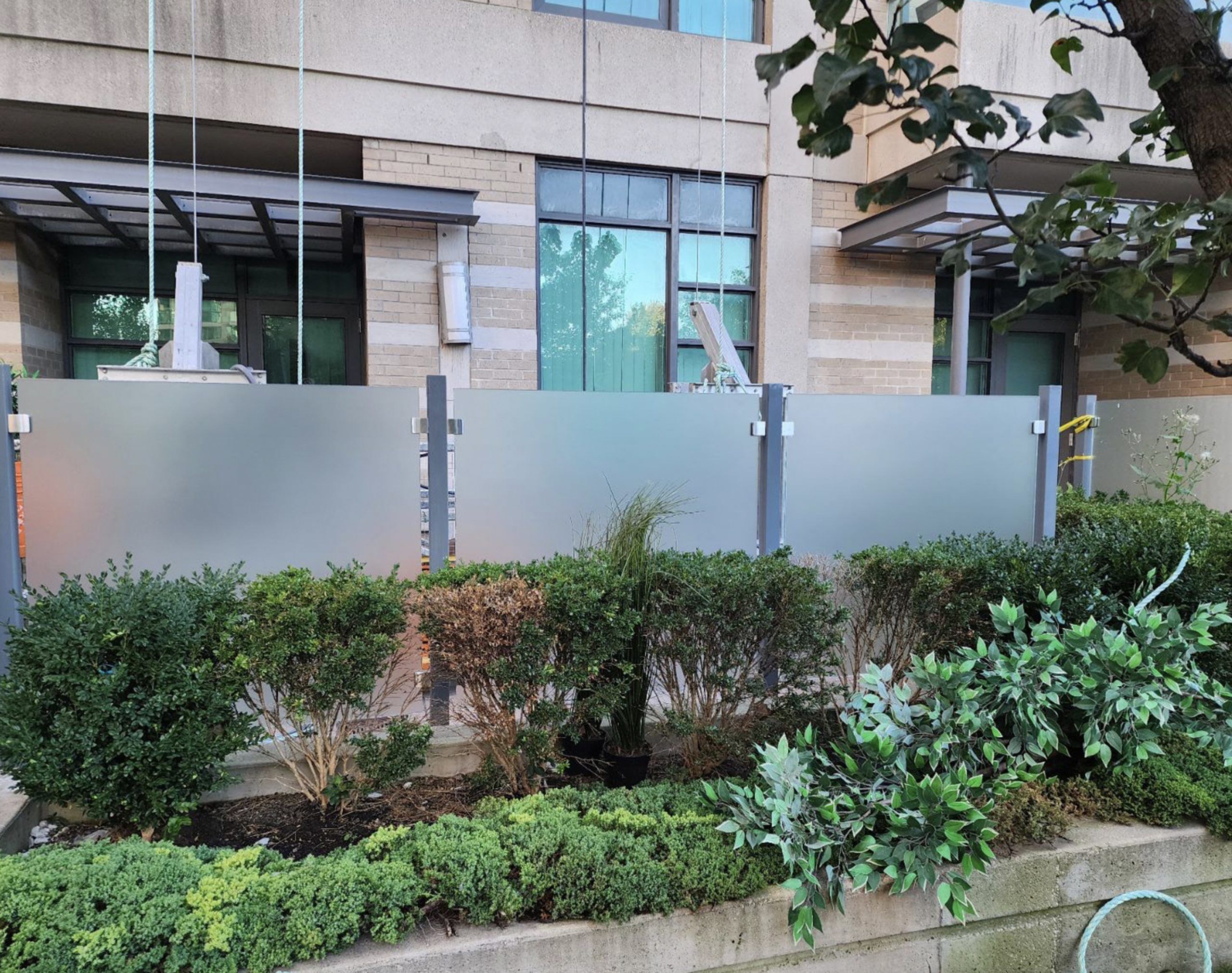
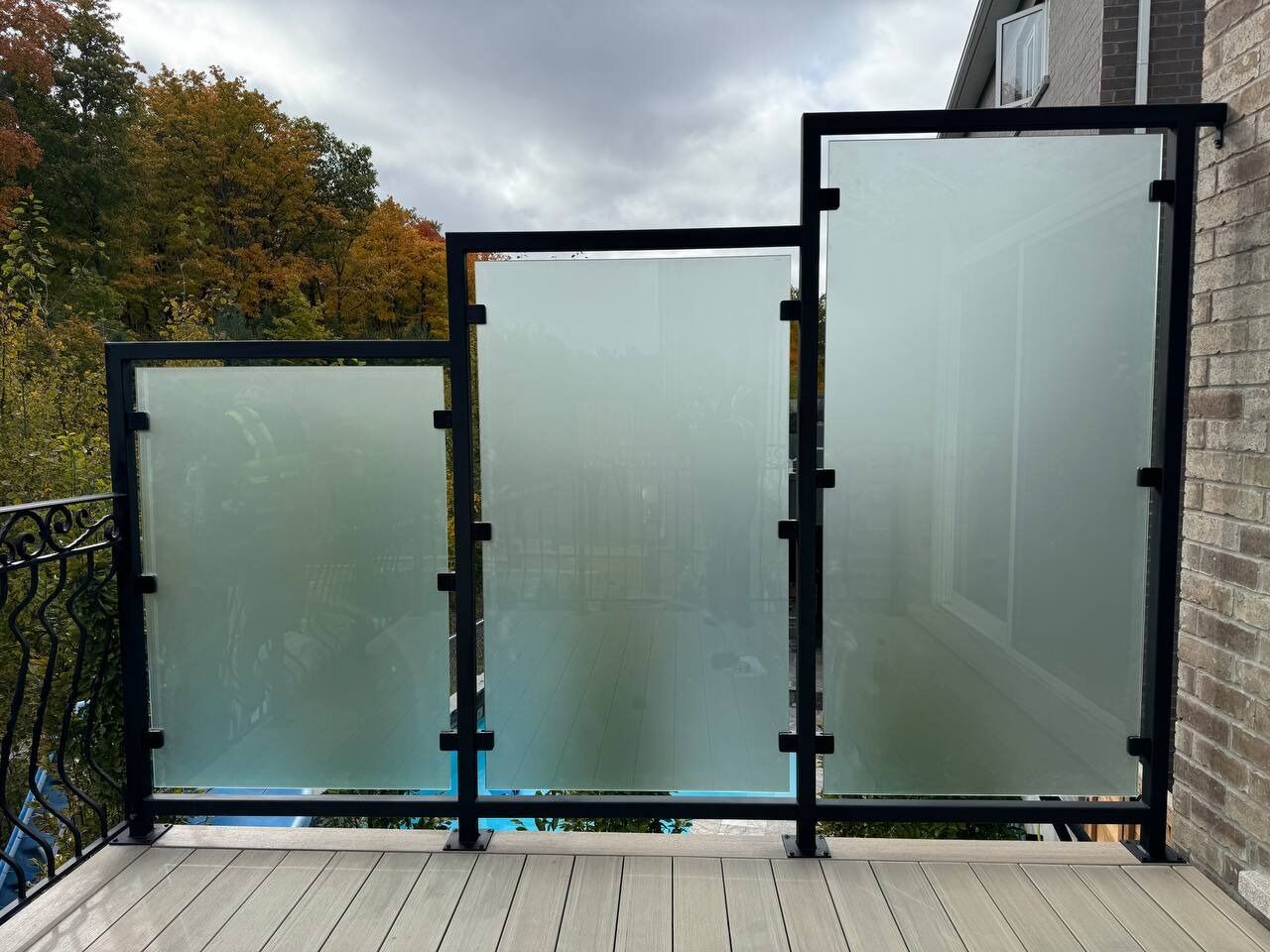
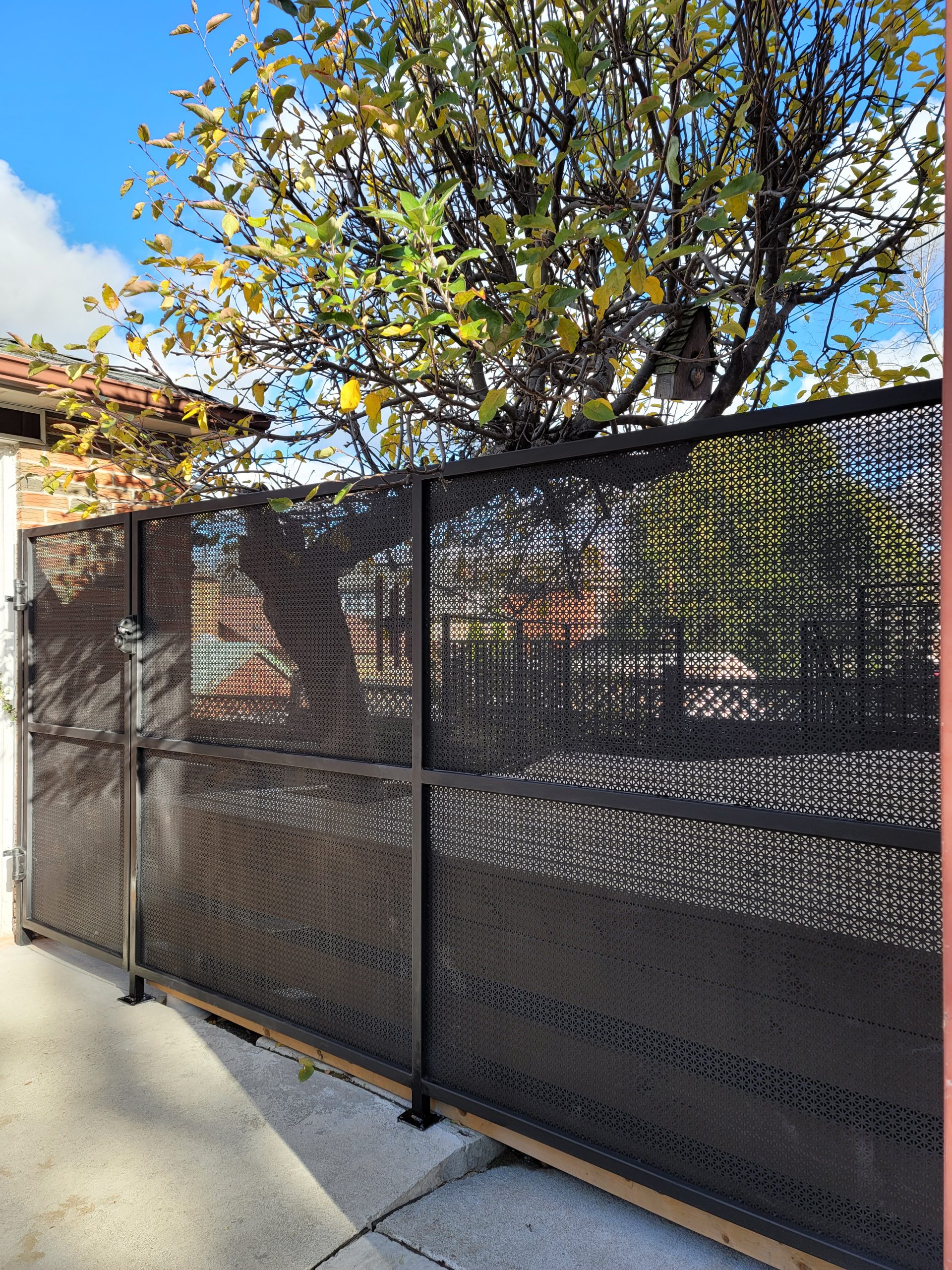
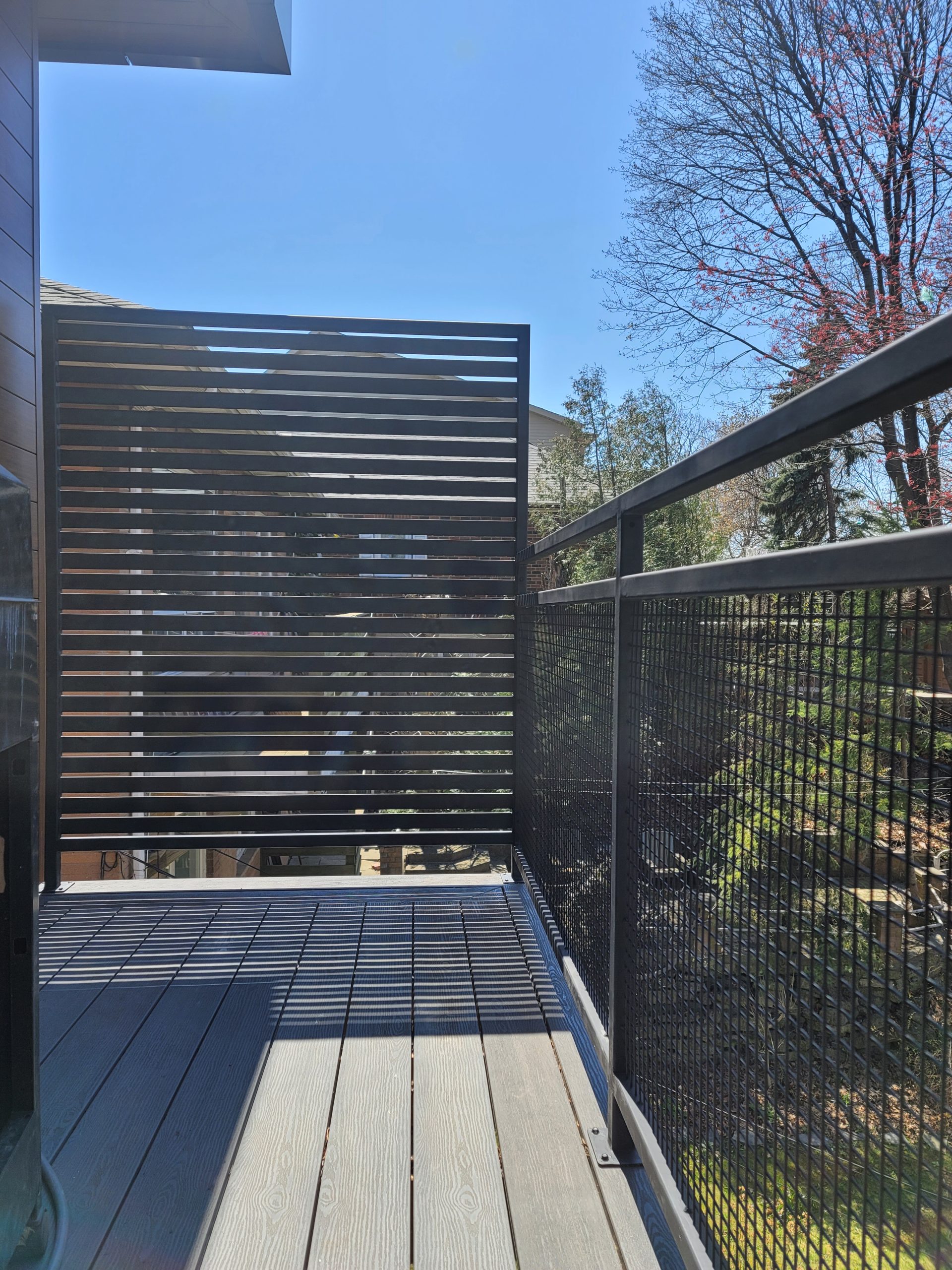
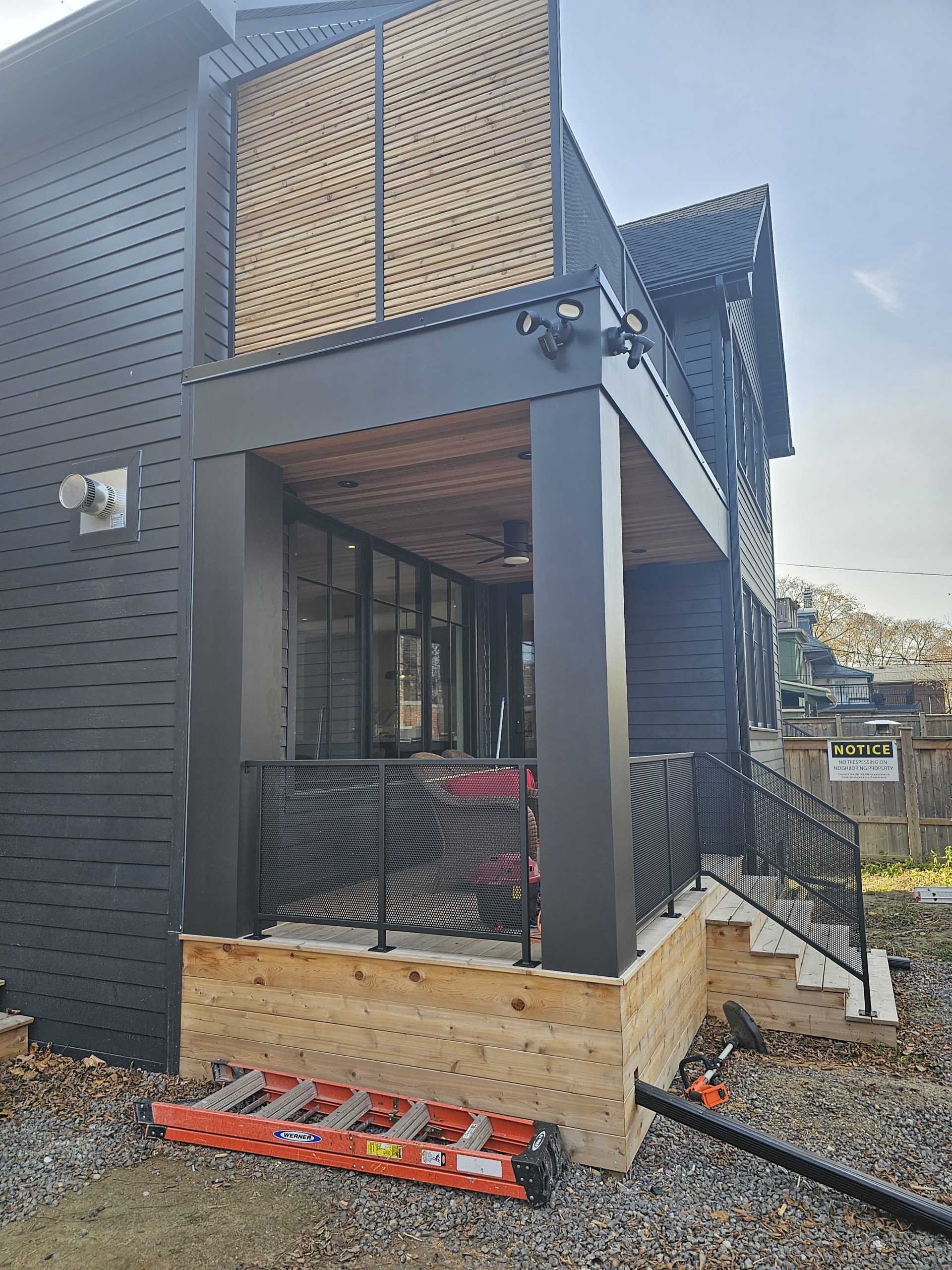
More rigid privacy-screen examples
These examples show how rigid screens can shape patio edges, lot-line separation, and visual screening around outdoor utility zones.
Screen configurations to consider
Different fixed-screen layouts solve different privacy and screening conditions.
Patio privacy panels
Used to block direct sightlines and create a more defined outdoor room where the privacy need is constant, not occasional.
A strong option when the screen should stay in place all season and all year.
Side-yard and lot-line screens
Helps create stronger visual separation where neighboring sightlines are too open for comfort.
Often chosen when the screen should stay in place as part of the permanent layout.
Equipment and utility screening
Useful when condensers, bins, or service equipment should be visually screened without necessarily needing a full lockable enclosure.
Can overlap with enclosure planning when both screening and access control matter.
Architectural separation screens
Appropriate where the screen needs to define a zone, guide movement, or create a fixed outdoor partition.
More about permanent spatial separation than on-demand enclosure.
When metal privacy screens are the right fit
Use metal screens when the privacy need is permanent and the screen should become part of the space.
You want permanent privacy
If the screen should stay in place full time, a rigid panel is often a better fit than a retractable fabric system.
You need a stronger visual divider
Metal screens make sense when the goal is to shape the exterior space more clearly and create firmer separation between zones.
You are screening an equipment or service area
A fixed panel can clean up visibility where the area does not need a full lockable cage but should not stay exposed.
When flexibility matters more than permanence
If you want the option to open the space back up or manage airflow with a retractable screen, we can review that approach as well.
What matters before a rigid privacy screen is installed
Permanent panels need to be planned around support, wind exposure, and the role the screen plays in the site.
Attachment points and support structure
We review whether the screen will tie into slab, posts, walls, framing, or another support system and size the layout accordingly.
Sightline and panel placement
The screen has to block the right view without landing in an awkward location or cutting across circulation in the space.
Wind and exposure conditions
A permanent outdoor panel needs to suit the actual exposure of the site, especially when it is screening an open yard or patio edge.
Whether screening alone is enough
Some spaces need privacy only. Others need privacy plus access control or equipment protection. We sort that out before recommending the system.
Related products worth comparing
Metal privacy screens often get planned alongside other exterior products depending on how the space needs to function.
Retractable Privacy Screens
Use fabric privacy screens when flexibility matters and you want the screen to disappear when the space is open.
Compare with retractable privacy screensPatio Privacy Screens
For patios that need bug control, airflow management, and a soft enclosure, the retractable patio screen route is usually stronger.
See patio privacy screensSecurity Enclosures
If the area also needs controlled access around equipment or materials, a screened enclosure may be more appropriate than a privacy panel alone.
See security enclosuresWhy clients come to us for outdoor privacy planning
We help match the screen to the space
Some spaces need a fixed architectural screen. Others need flexible retractable coverage. We sort that out based on how the area is actually used.
We look at privacy in the context of the full exterior layout
A screen may need to work alongside fencing, gates, pergolas, or shutters. We account for the full site instead of treating it as an isolated panel.
We keep the recommendation functional
The goal is visual privacy and separation with the right level of permanence, not unnecessary complexity or decorative filler.
Request a privacy screen review
We can assess the space, confirm the right screen layout, and map out a privacy solution that fits the property properly.
- Patio, side-yard, and equipment-screening review
- Rigid vs. retractable comparison based on site use
- Layout and support conditions confirmed on-site
If this looks like the right direction, we can confirm sizing, mounting, layout, and the right barrier type on-site.
Request a Privacy Screen Quote
Free consultation, no obligation. We respond within 2 hours.