
Security Fencing
Perimeter protection for property lines, side yards, service areas, and commercial edges that need a stronger physical boundary and a cleaner site edge.
 CANASA Member
 5-Year Warranty
When the perimeter is too open
A lot of security issues start before anyone gets to the building. Open side yards, poorly defined rear property lines, exposed service areas, and lightly separated commercial edges make access too easy and leave equipment or outdoor storage more visible than it should be.
Security fencing solves that by establishing a stronger, more deliberate perimeter. It helps define where the site begins, how people move through it, and how the rest of the property is protected.
- Property lines that need more physical definition
- Commercial edges that need stronger separation
- Side yards and storage areas that are too exposed
- Sites where a gate needs a proper fence line to connect to
What security fencing is designed to do
Security fencing is a perimeter system used to define, protect, and control access around the edges of a site. Depending on the property, that may mean aluminum picket fencing, heavier steel sections, or anti-climb designs with a more defensive profile.
The main objective is to create a clear physical boundary that improves security without turning the property into an awkward or unworkable space.
- Defines the property edge more clearly
- Adds a stronger physical deterrent than basic decorative fencing
- Supports gate systems and controlled entry points
- Protects side yards, storage zones, and commercial service areas
More perimeter fencing examples
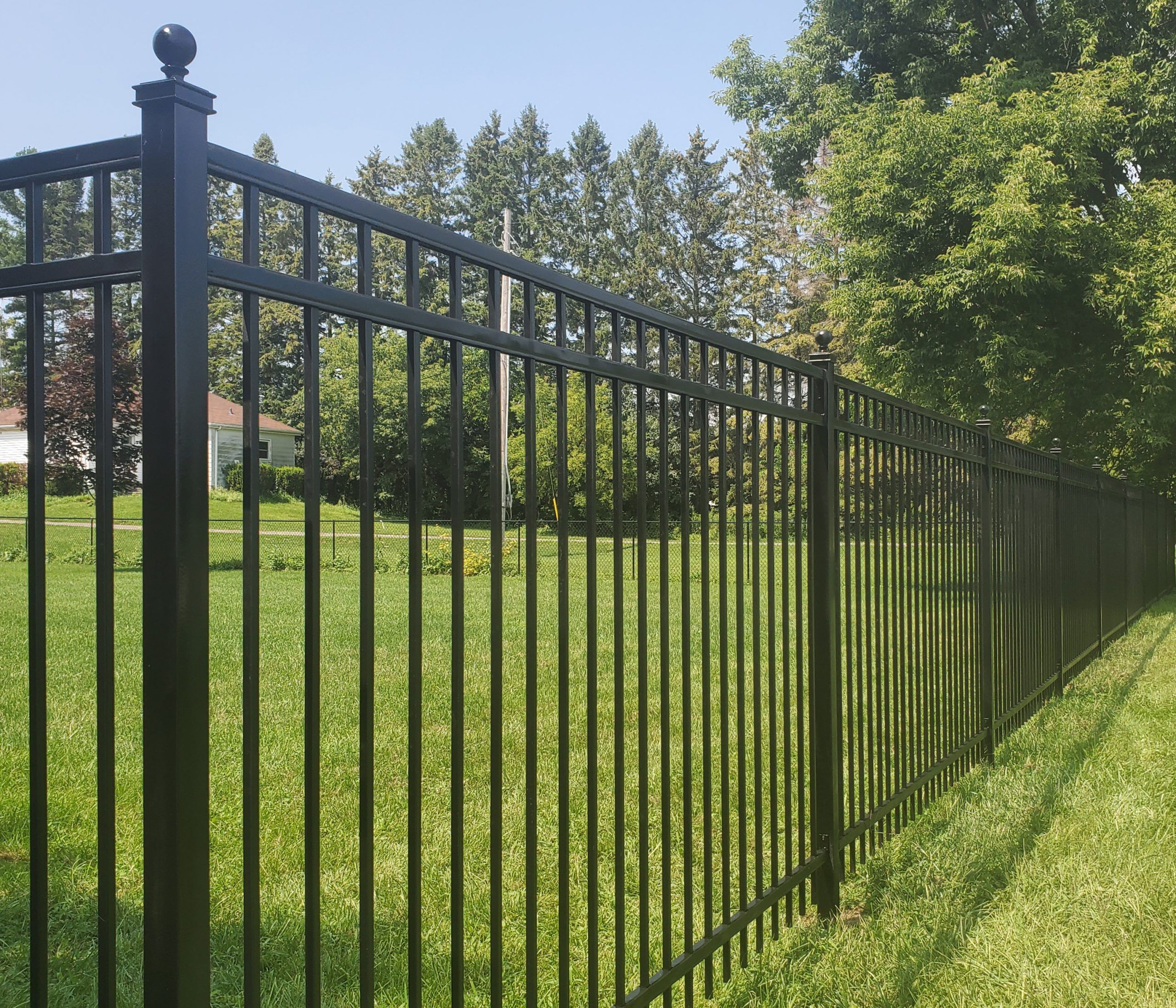
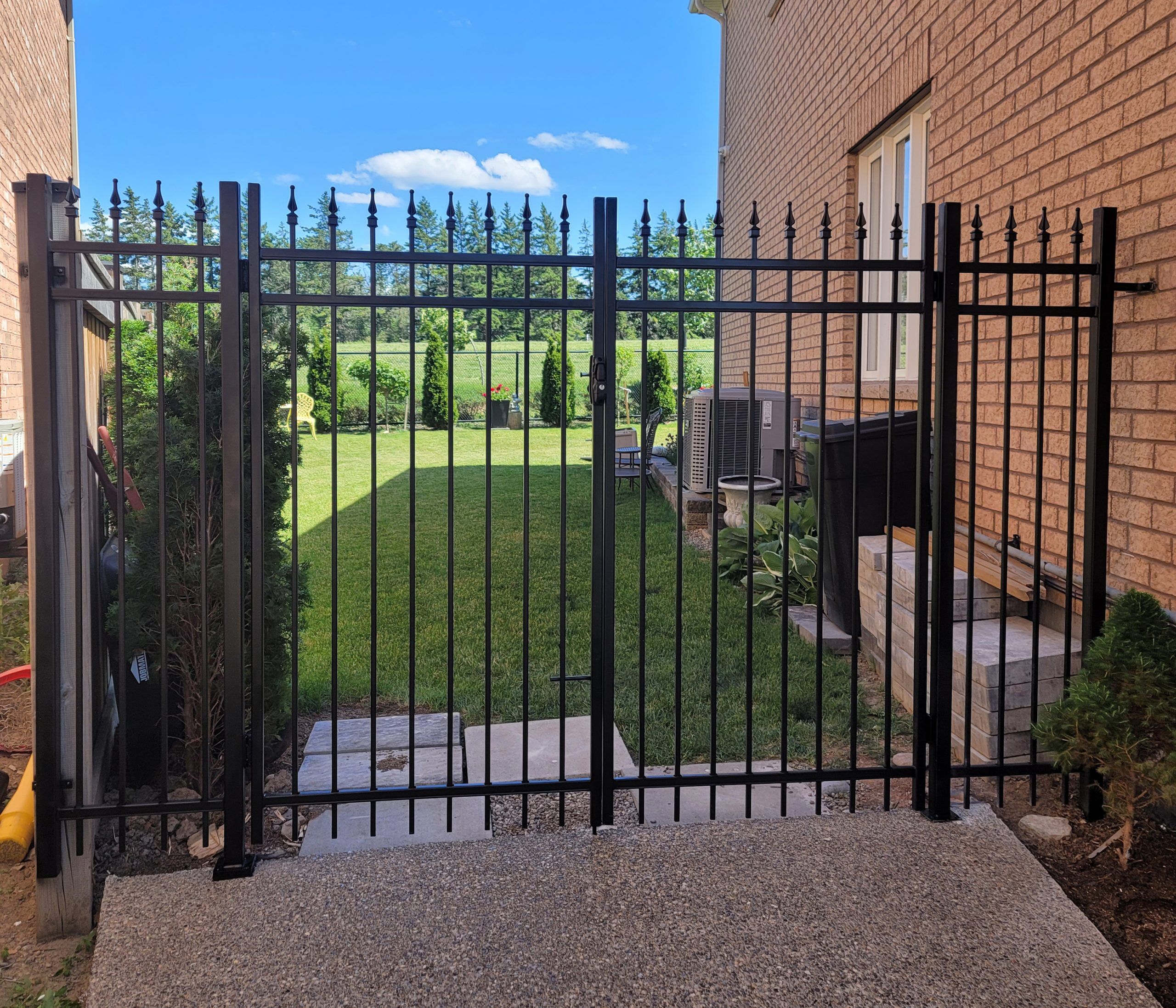
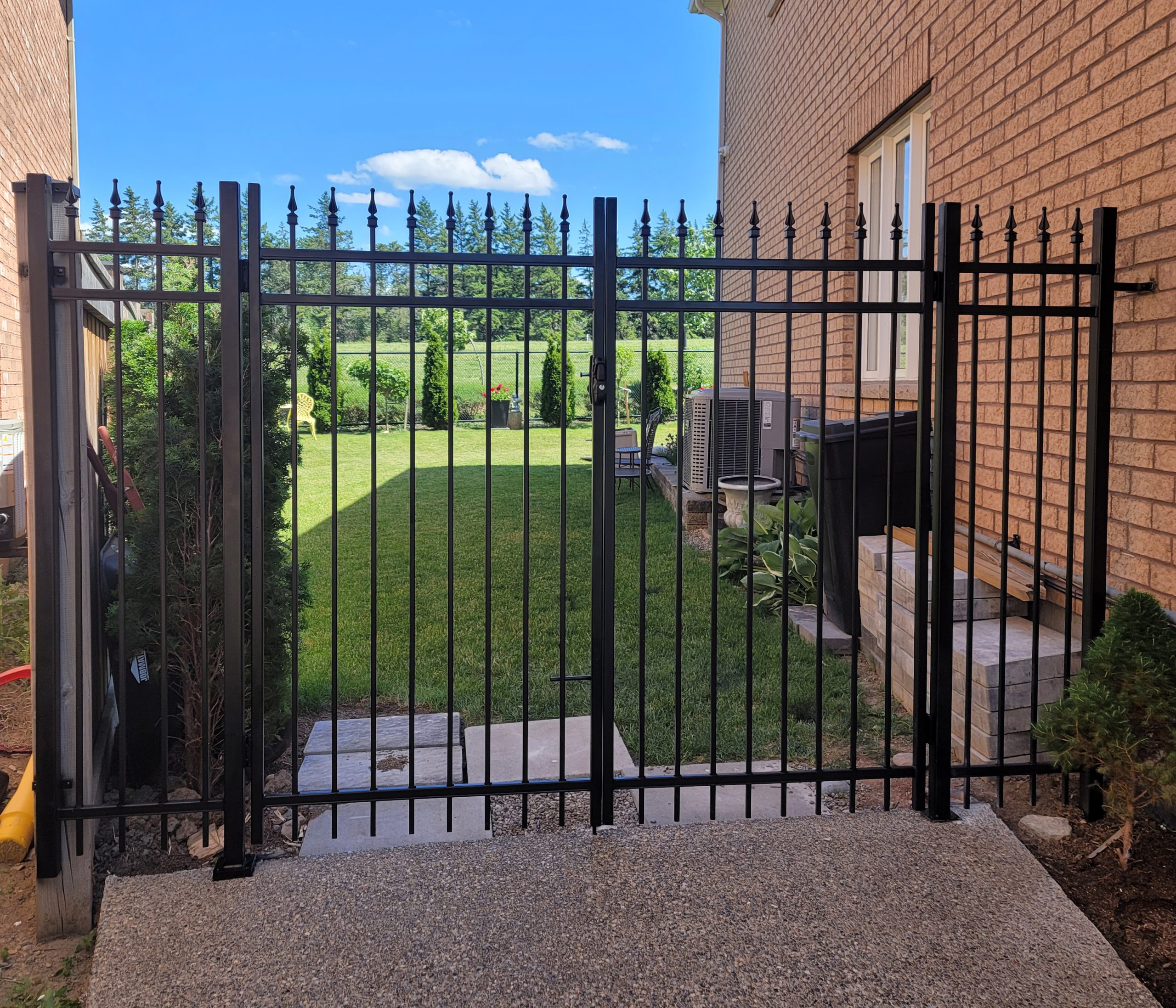
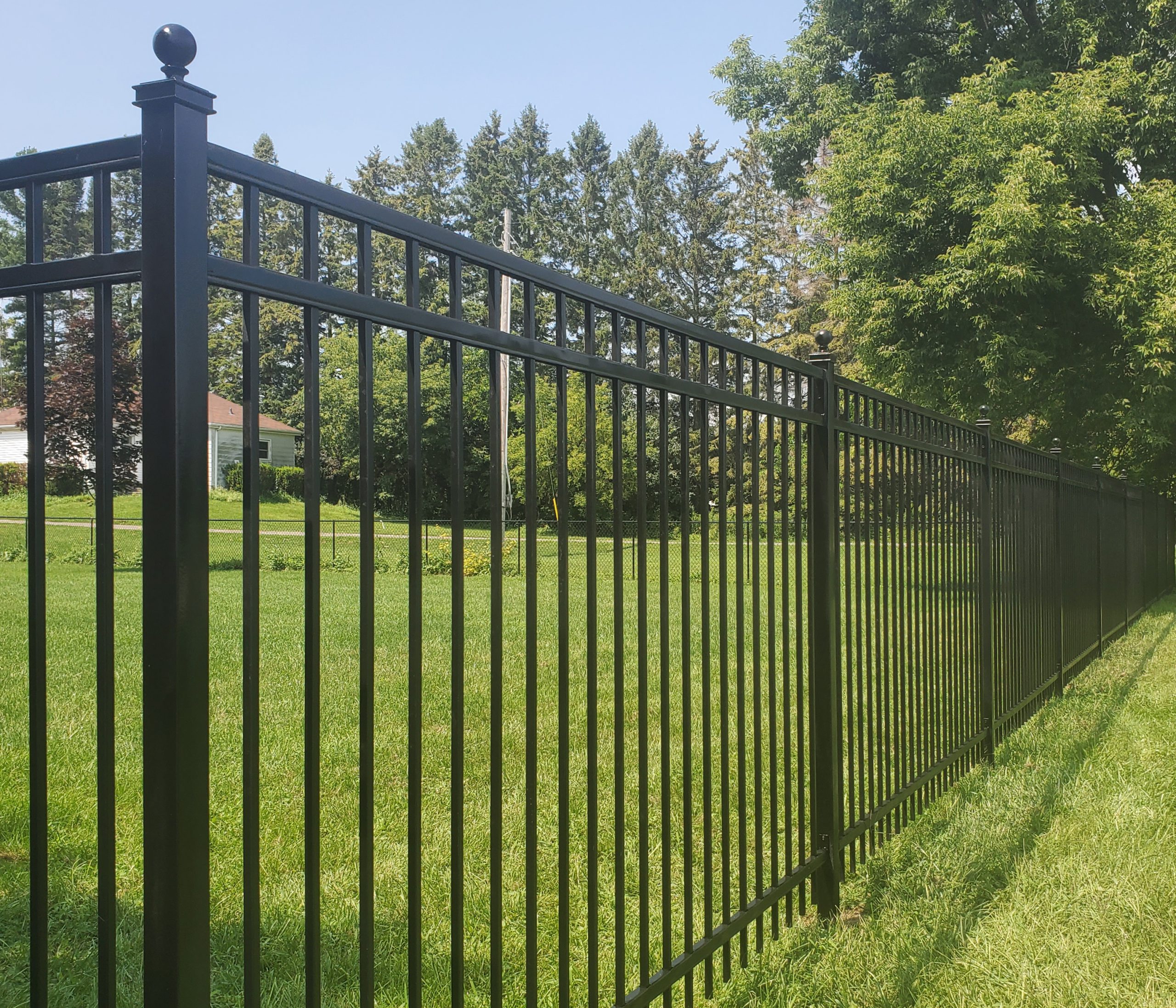
These examples show how perimeter fencing can range from tighter residential separations to longer perimeter runs.
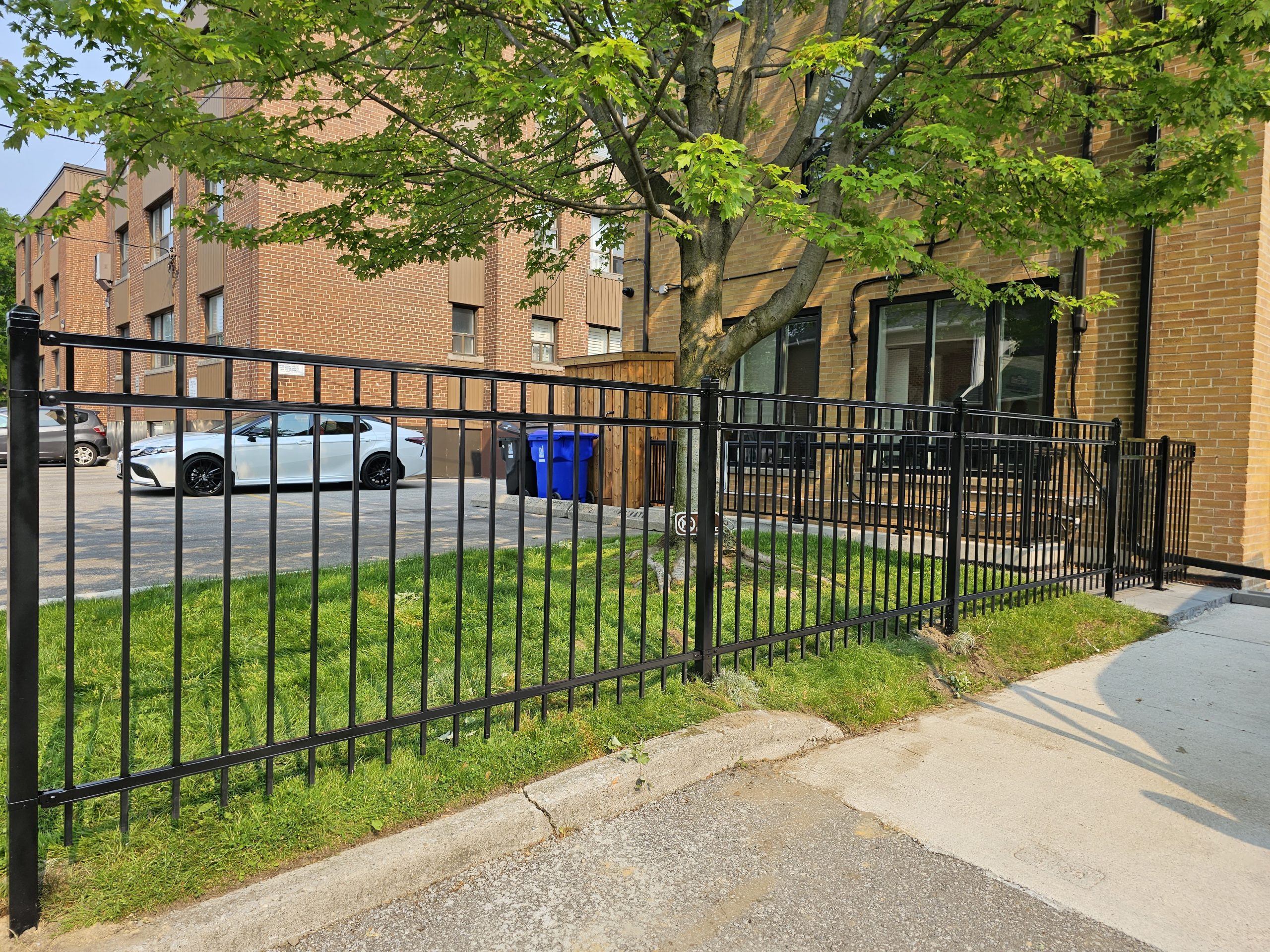
Fencing options by site type
The right fence depends on the exposure level, the look required, and how aggressively the perimeter needs to perform.
Aluminum security fencing
A cleaner, lower-maintenance option for residential or light-commercial sites that still need a stronger boundary than standard yard fencing.
Often chosen where appearance matters but the fence still has to function as real separation.
Steel security fencing
A heavier-duty option for properties that need a more robust perimeter and stronger resistance to tampering or impact.
Common around commercial edges, storage zones, and higher-use service areas.
Anti-climb fence designs
Appropriate when the priority is reducing footholds, limiting easy scaling, and making the perimeter more defensive.
Best suited to sites where the boundary itself is part of the security strategy, not just a visual divider.
Fence-and-gate combinations
Many projects need a perimeter line with one or more controlled access points built into the same system.
Planning the gate and fence together usually leads to a cleaner and more secure result.
When fencing is the right answer
Choose security fencing when the main concern is defining and protecting the property boundary.
Residential side and rear boundaries
A stronger fence is useful when the property line needs clearer definition or when rear access needs a more secure edge than a standard yard fence can provide.
Commercial edges and service zones
Fencing works well around storage areas, service corridors, side lots, utility zones, and outdoor workspaces that need separation from the public side of the property.
Sites that also need a gate
A gate performs better when it ties into a properly planned perimeter instead of sitting on its own without a continuous boundary condition.
When the opening needs its own protection
Some properties need perimeter fencing at the boundary and another security layer at the window, door, or storefront opening.
What we check before fencing is laid out
Perimeter work depends on line, grade, base conditions, and how access points tie into the run.
Property line and layout accuracy
We confirm the practical fence path and how it fits the real site before a layout is finalized.
Posts, footings, and anchoring
Different fence types call for different support details, and those have to match the surface and expected use level.
Grade changes and transitions
Slopes, steps, and uneven ground affect panel sizing, bottom clearances, and overall appearance along the run.
Integration with gates or service access
If the perimeter includes one or more entries, the fence needs to be planned around those access points from the start.
Related systems often planned with fencing
Perimeter fencing rarely stands alone on a security-focused property.
Security Gates
If the property needs controlled vehicle or pedestrian access, the gate and fence should be designed as one perimeter system.
See security gatesSecurity Enclosures
When the site also has exposed equipment or storage areas, targeted enclosures can protect the specific assets inside the broader perimeter.
See security enclosuresCommercial Roll-Up Shutters
For the actual building openings behind the fence line, commercial shutters may still be needed as the next security layer.
See commercial shutter solutionsWhy clients bring perimeter projects to us
We approach fencing as part of a larger security system
That helps when the property needs a perimeter, a gate, and opening protection working together instead of being planned separately.
We stay focused on actual site use
The best fence for a residential rear line is not always the best fence for a service yard or high-use commercial edge.
We plan for layout, circulation, and maintenance
A perimeter has to stay functional. We account for access routes, sight lines, and how the property is actually used after installation.
Request a perimeter fencing review
We can assess the property edge, review the right fence profile, and confirm whether gates or enclosures should be included in the same scope.
- Boundary and access review
- Guidance on aluminum vs. steel vs. anti-climb profiles
- Integrated gate planning if needed
If this looks like the right direction, we can confirm sizing, mounting, layout, and the right barrier type on-site.
Request a Fencing Quote
Free consultation, no obligation. We respond within 2 hours.