
Security Gates
Custom metal gates for driveways, laneways, service entries, and private approaches that need controlled access and a stronger first layer at the property line.
 CANASA Member
 5-Year Warranty
When an open access point becomes the weak spot
Some properties stay too open at the approach. That is common on driveways, laneways, side entrances, service yards, and parking or loading areas where vehicles or foot traffic can move too easily onto the site.
A security gate gives you a controlled point of entry. It creates a clear boundary, slows access, and makes the site easier to manage after hours.
- Driveways that stay open day and night
- Laneways or rear approaches with no controlled entry point
- Commercial service entries that need restricted vehicle access
- Shared or semi-private approaches that need clearer access control
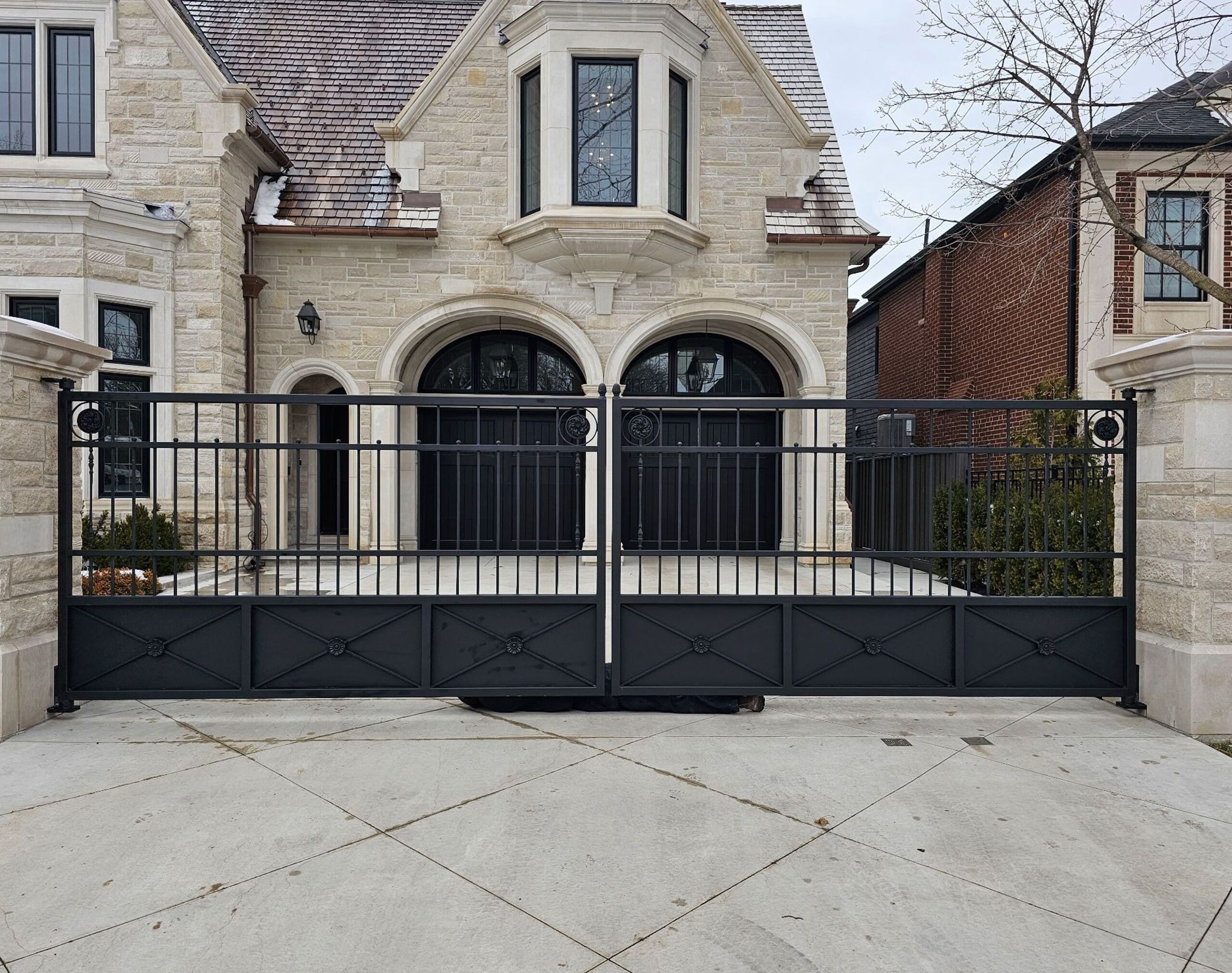
What a security gate does
A security gate is an operable metal barrier used to control who can enter a property or service area. Depending on the site, that can mean a sliding gate, a swing gate, or an automated system with keypad, remote, or intercom access.
The purpose is straightforward: define the entry point, control movement, and add a stronger layer between the street and the assets behind it.
- Controlled entry for vehicles and pedestrians
- Clearer separation between public and private space
- A stronger perimeter layer for homes, laneways, and commercial sites
- Optional automation for easier daily use
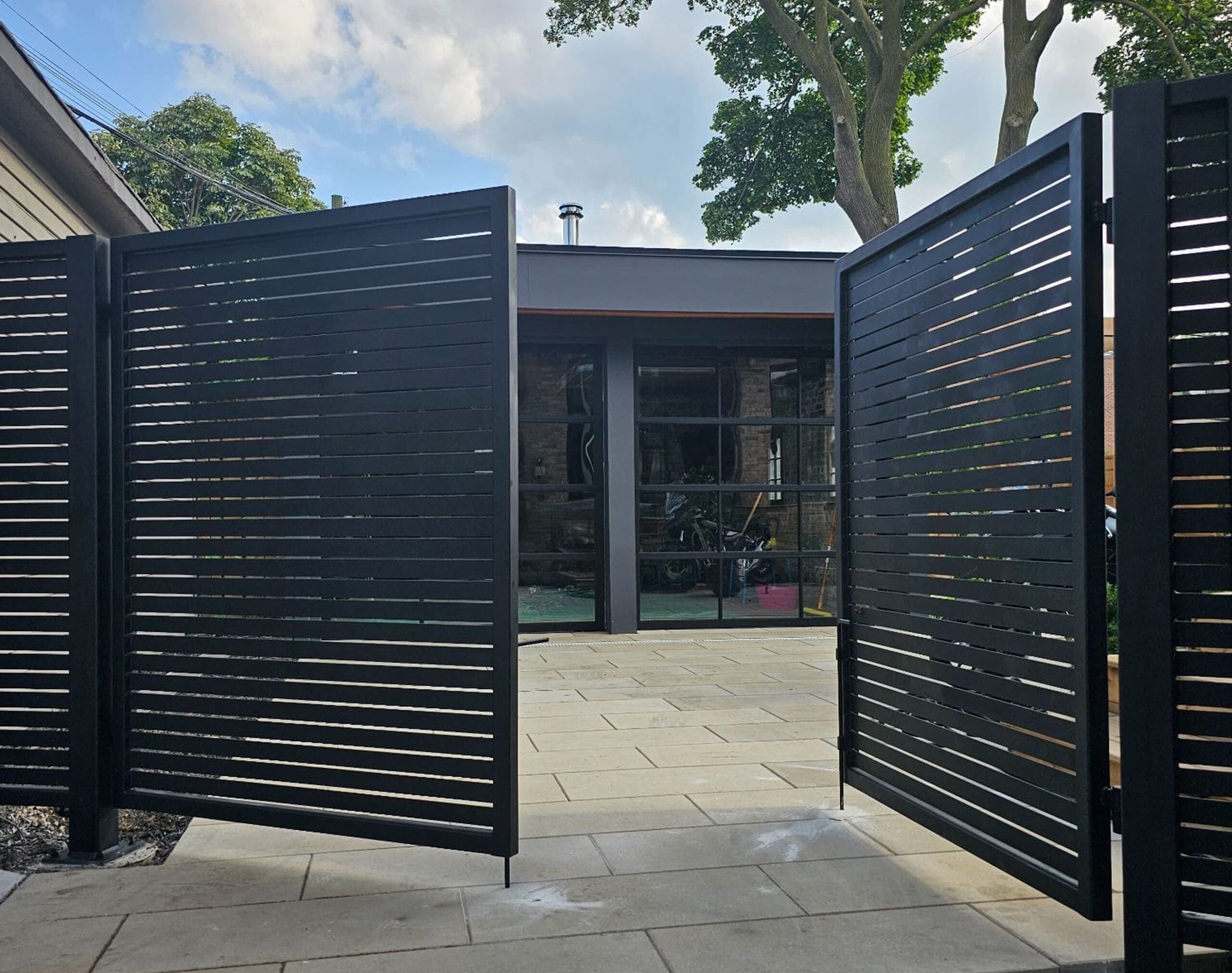
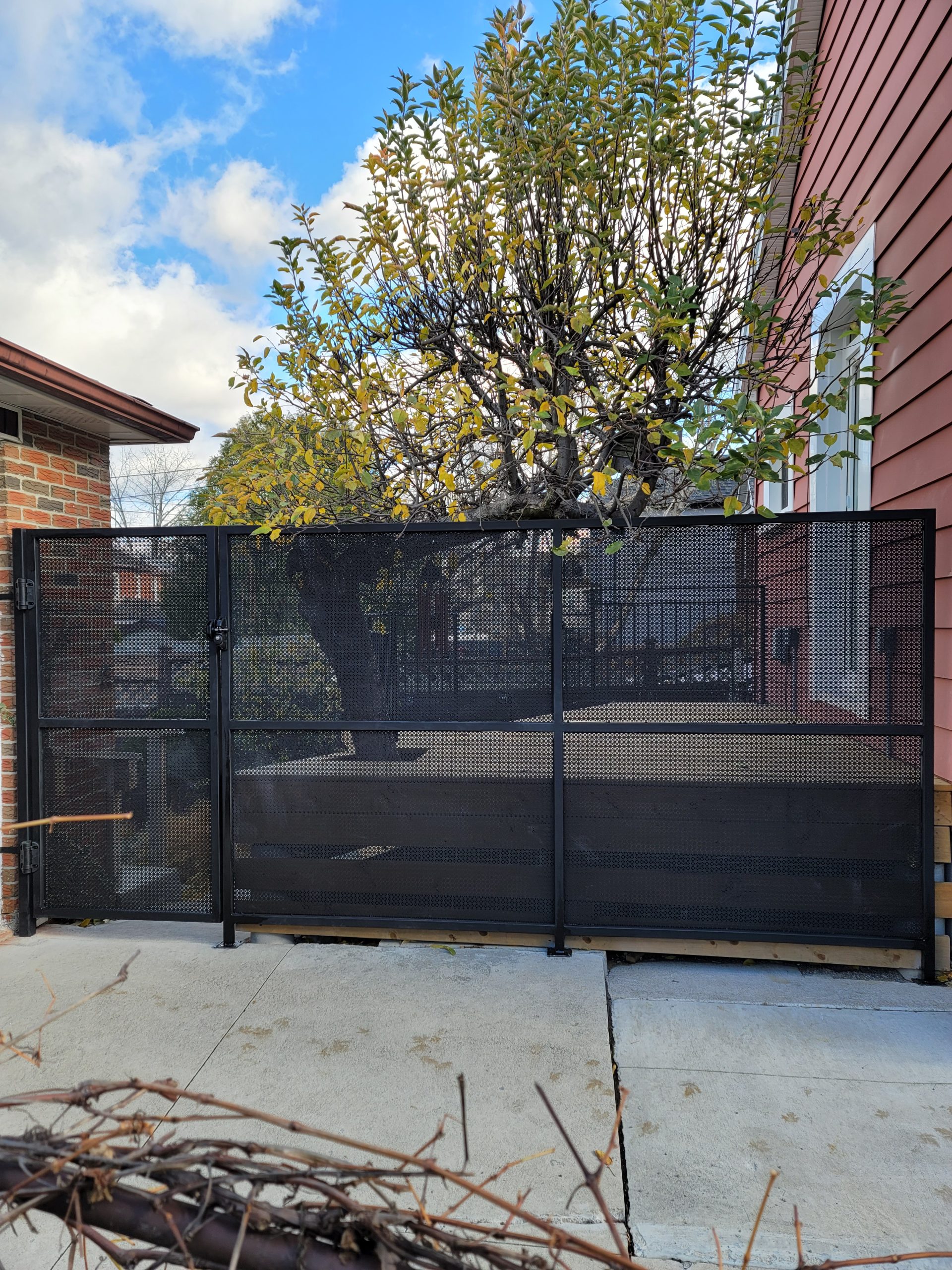
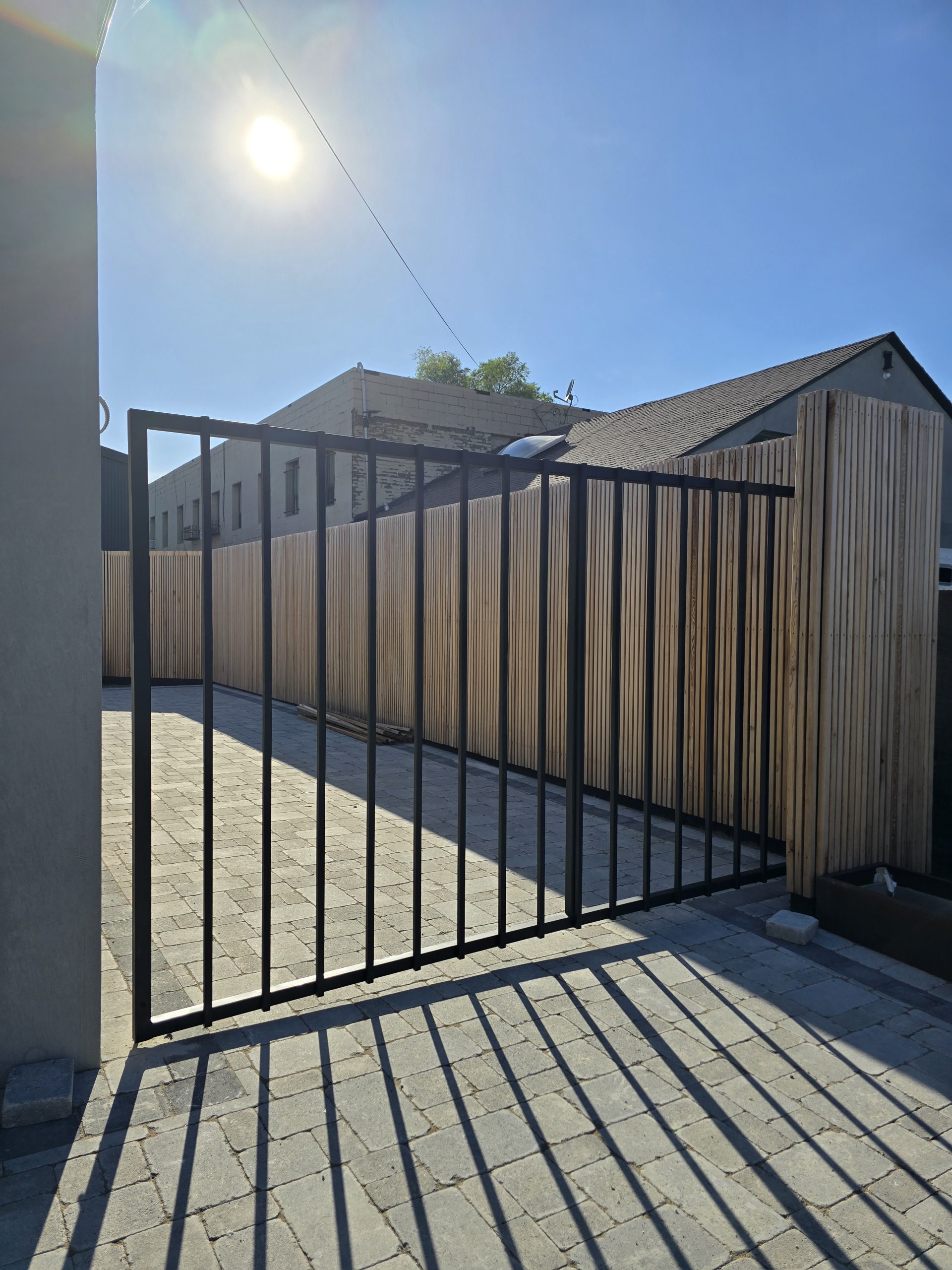
More security gate examples
Different gate layouts solve different access-control conditions, from private side entries to full-width driveway approaches.
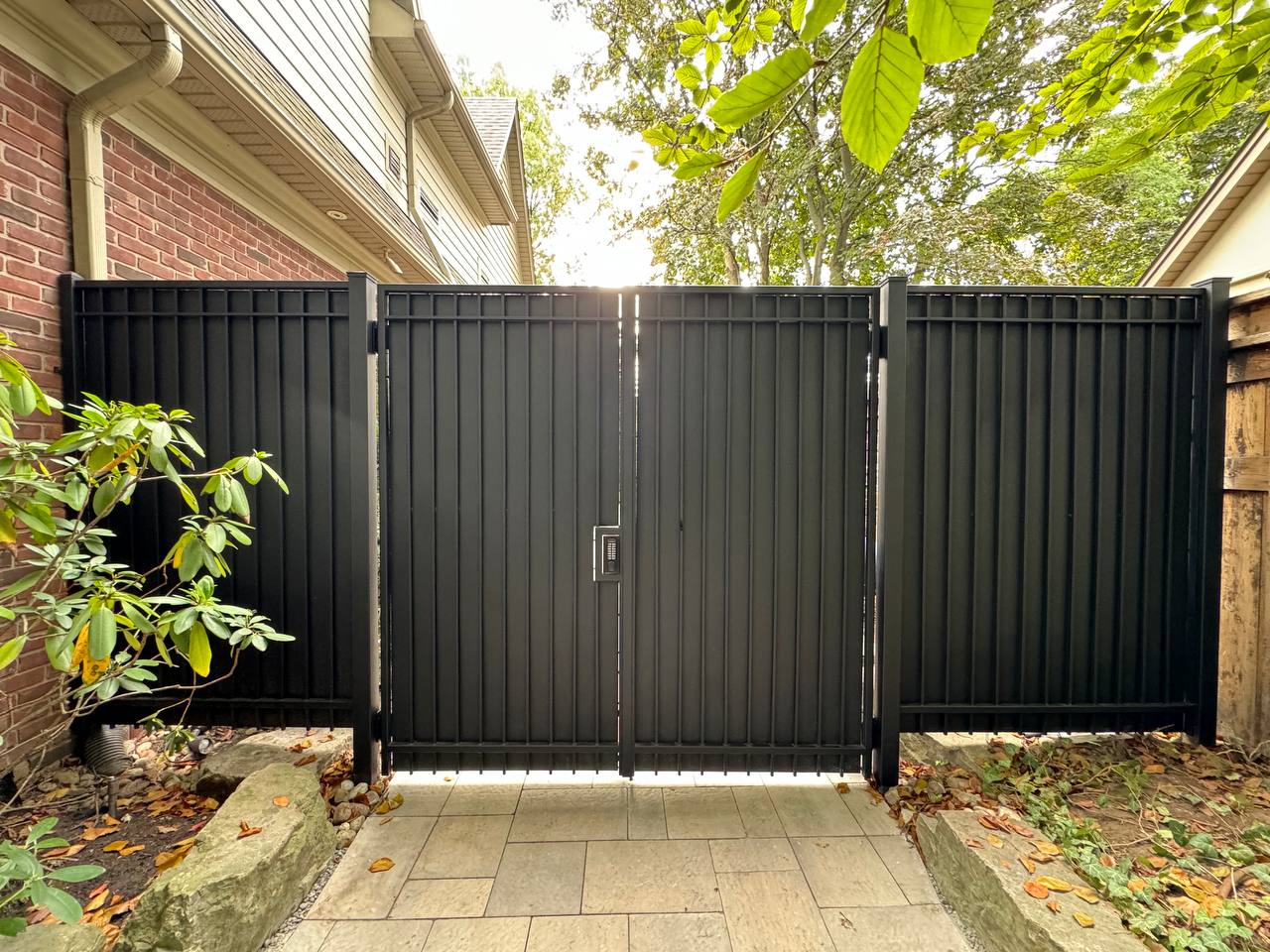
Gate types and configurations
The right gate depends on clearance, slope, usage frequency, and how the entry is approached.
Sliding gates
Best when you have lateral run space and want to avoid the swing arc of a leaf gate.
Common for driveways, laneways, and commercial access points with regular vehicle use.
Swing gates
A practical option when there is enough clearance for the leaf to open inward or outward without disrupting site flow.
Often used on residential entries and lower-traffic access points.
Automated gates
Ideal when the gate will be used often or when remote, keypad, or intercom-based access control matters.
Automation makes sense when convenience is part of the security plan, not just a nice extra.
Manual gates
Useful for less frequent access points where the priority is a physical barrier without added automation hardware.
Often appropriate for secondary entries or private utility access.
When security gates are the right choice
Use gates when the first priority is controlling the route onto the property.
Driveways and front approaches
A gate makes sense when you want a clear, lockable line between the street and the private portion of the property.
Laneways and rear access points
Laneway conditions often benefit from a gate at the approach and a shutter or roll-up garage door at the opening itself if both layers are needed.
Commercial yards and service entries
For loading, parking, and service areas, a gate helps manage after-hours access and keeps the perimeter more controlled.
When the entry point also needs closure
Some properties need a gate at the approach and an operable closure at the building opening as part of the same plan.
What matters before a gate is specified
Gate performance depends as much on site layout as the gate itself.
Post locations and structural support
We review where support posts or attachment points can go and what base condition is available for secure anchoring.
Travel path and clearance
Sliding gates need side run. Swing gates need open arc clearance. We confirm that the gate can operate without conflicting with vehicles, slopes, or parked cars.
Automation and access hardware
If the gate will be motorized, we review power, wiring path, safety devices, and how users will actually open the system day to day.
Winter use and maintenance access
Snow storage, drainage, and service access should be accounted for early so the gate stays practical through the year.
Related security systems for the same property
Gates often work best as one layer in a larger access and opening-security plan.
Laneway Roll-Up Shutters
Use a laneway shutter when the opening itself needs to be locked down, not just the approach in front of it.
See laneway roll-up shuttersRoll-Up Garage Doors
For vehicle openings that need daily operable closure, a roll-up garage door may solve the actual entry point better than a perimeter barrier alone.
See roll-up garage doorsSecurity Fencing
If the gate needs a proper perimeter to tie into, fencing should be planned alongside it instead of as an afterthought.
See security fencingWhy clients call us about access-control projects
We think about movement, not just metal
A gate has to work with cars, delivery patterns, snow, and how the site actually operates. We account for that before recommending a layout.
We can coordinate the gate with the rest of the security system
If the same property also needs a shutter, fence, or enclosure, we plan those layers so they support each other instead of competing for space.
We keep the recommendation practical
Some sites need automation. Others do not. We stay focused on the simplest system that still solves the access problem properly.
Request a gate layout review
We can assess opening width, post locations, slide or swing clearance, and whether automation makes sense for the site.
- Driveway, laneway, or service-entry review
- Guidance on sliding vs. swing layouts
- Automation and access-control planning
If this looks like the right direction, we can confirm sizing, mounting, layout, and the right barrier type on-site.
Request a Gate Quote
Free consultation, no obligation. We respond within 2 hours.