
 CANASA Member
What Are Your Options for Basement Window Security?
Your basement window sits at grade or down in a window well, a few steps from the side yard, and the room behind it is a bedroom, a home office or a rental unit. You want basement window security that closes off that glass, but you can't seal shut a window someone may one day need to climb out of. That second part is where most bars-versus-shutters decisions in the GTA actually get made.
There are four realistic options: fixed bars, hinged bars with an inside release, a roll-up shutter operated from inside, and laminated glass or security film. Each handles daylight, looks and emergency exit differently, and the Ontario Building Code decides which of them can go on a bedroom window.
Bars, Shutters or Film: How the Four Options Compare
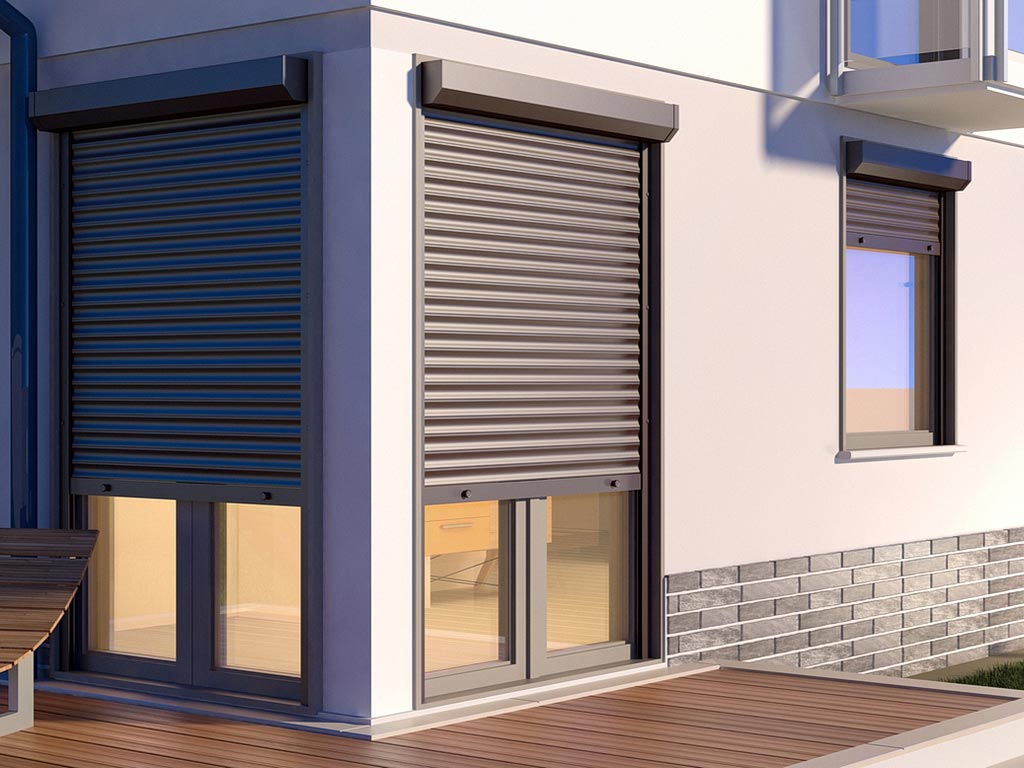
Fixed bars are the simplest permanent barrier but can't go on a bedroom window. Hinged bars and roll-up shutters can, as long as they open from inside. Film keeps the window fully usable but leaves the glass as the only barrier.
| Fixed bars | Hinged bars, inside release | Roll-up shutter | Laminated glass or film | |
|---|---|---|---|---|
| Open / closed | Always in place, a visible grid over the window | In place until released, then swings out like a gate | Rolls into a housing above the window; closed, a solid aluminum curtain covers the glass | Looks like ordinary glass at all times |
| Daylight | Most light passes between the bars | Most light passes between the bars | Full daylight when open; blocks most light when closed | Full daylight |
| Bedroom egress | Not compatible. The opening is permanently blocked | Compatible if the release works from inside without keys, tools or special knowledge | Compatible if it opens from inside: crank, or a motor with a manual override | The window works as it did before |
| Cost direction | Lowest of the physical barriers; quoted per opening | More than fixed bars (hinges and release hardware) | Typically $800–$1,500 per window, installed | Usually the lowest per window |
| Upkeep | Check paint and anchors now and then | Test the release; keep hinges and the well clear of ice and leaves | Keep side guides clear of snow and ice before operating | Clean gently; film ages and is eventually replaced |
Laminated glass and security film hold cracked glass together in the frame; the glass is still what someone faces. Our security shutters vs. window film comparison covers that trade-off in detail. For a closer look at fixed and custom bar layouts, see our window and door security bars page.

What Does the Ontario Building Code Say About Bedroom Windows?
Unless the suite is sprinklered, every bedroom needs at least one outside window or exterior door that opens from the inside without keys, tools or special knowledge, with a minimum clear opening. The rule is Division B, Article 9.9.10.1 of the Ontario Building Code.
The current code is O. Reg. 163/24, the 2024 Ontario Building Code, in force since January 1, 2025. It replaced O. Reg. 332/12, which carried the same bedroom rule under the same article number. The City of Ottawa egress window advisory, issued under the 2024 code, summarizes what a bedroom egress window has to do:
- Open from the inside without keys, tools or special knowledge.
- When fully open, give an unobstructed opening of at least 0.35 m², with no dimension less than 380 mm.
- Stay open on its own, without being propped or held.
- Where it opens into a window well, the Code also requires clear space in front of the window, and a way to climb out of a deep well. Check the current clearance with your city's building department before you dig or enlarge a well.
What the Egress Rule Means for Bars and Shutters on a Bedroom Window
Fixed bars are out on a bedroom window. Bars there must release from inside without a tool, and a roll-up shutter must be operable from inside, by crank or by a motor with a manual override. The code doesn't name bars or shutters; it sets the outcome, and anything over the glass is part of the opening.
- Bars: hinged or swing-out, with a release on the inside. No padlock, no key, no pin that has to be pulled with pliers. Try it the way a guest would, in the dark.
- Manual shutter: a crank rod operated from inside the room; confirm the crank position for each bedroom window at the measure. Leave the handle fitted or hung beside the window; a handle in a drawer is a tool someone has to find.
- Motorized shutter: a wall switch or remote inside the room, plus a manual override so the shutter can still be raised in a power outage. Ask for the manual override in writing for any bedroom window.
- Clear opening: the housing and side guides mount around the window and must not shrink the clear opening or the space in the window well.
- Tell the installer which windows are bedrooms. Our window security shutters page says the same: if a window is a required egress route, we plan for it at the measurement.
Renting Out the Basement? Check With the City First
A basement apartment or other second unit has its own Building Code and Fire Code requirements, and the means of escape from each bedroom is one of the items reviewed. Before you add bars or a shutter over a tenant's bedroom window, ask your city's building department what applies to your unit.
Whatever you install, the tenant has to be able to operate it from inside. Show them the release or the crank, and leave written instructions in the room.
Which Basement Window Bars or Shutter Fit Which Window?
Start with what the room is used for, not the hardware. A bedroom window needs an inside-operable option; a utility or laundry window usually doesn't.
- Bedroom, or any room someone sleeps in: hinged bars with an inside release, or a roll-up shutter operated from inside. Never fixed bars.
- Utility, mechanical or storage room: fixed bars are usually the simplest fit, as long as that window isn't a bedroom's way out.
- Laundry room: fixed bars if nobody sleeps there; a shutter if you also want privacy and a dark room.
- Walkout patio door: a patio door shutter operated from inside, typically from $1,900 per door. If the walkout is a bedroom's exit, the same inside-operation rule applies.
- Rental unit bedroom: same as any bedroom, plus a check with the city.
- Window you want to look unchanged: laminated glass or film.
What Does Each Option Cost in the GTA?
A roll-up window shutter is typically $800–$1,500 per window, installed. We don't publish a price for bars, because layout, anchoring and release hardware vary too much from one opening to the next; they're quoted after a site visit.
- Shutter price moves on: window size, slat profile, and crank versus motor. Our specifications page lists the profiles and size limits.
- Bar price moves on: opening size, bar layout, what it anchors into (brick, block, poured concrete or wood), and whether it needs hinges and an inside release.
- Both: access to the window. A deep or narrow window well adds time.
Before You Book a Measurement
Five minutes of notes makes the site visit faster and the quote more accurate.
Then request a free onsite measurement. Roman measures on site, asks which rooms are bedrooms, and gives you a written quote for bars, a shutter, or both. We reply within 2 hours.
- List each basement and ground-floor window and what the room is used for. Mark every bedroom.
- Note which windows open into a window well, and roughly how deep the well is.
- Note whether there's an outlet or power nearby if you're considering a motor.
- If any room is rented, say so.
- Take a photo of each window from outside.