 CANASA Member
Can You See Through a Privacy Screen at Night? The Physics Behind It
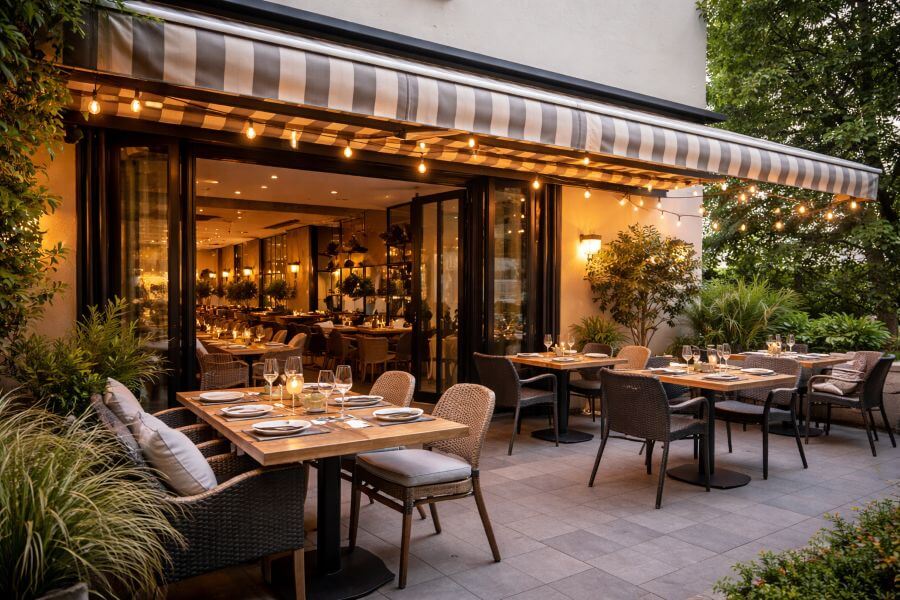
Your neighbour's second-storey window looks directly onto your deck, or your restaurant patio faces a sidewalk and half your two-tops go unsold because nobody wants to eat in a fishbowl. You've priced retractable privacy screens, seen "privacy" on every product page, and still can't get a straight answer to the one question that matters before you buy: can you see through a privacy screen at night? After 500+ installs across the GTA, this is the question we get at nearly every quote — and the honest answer surprises most people.
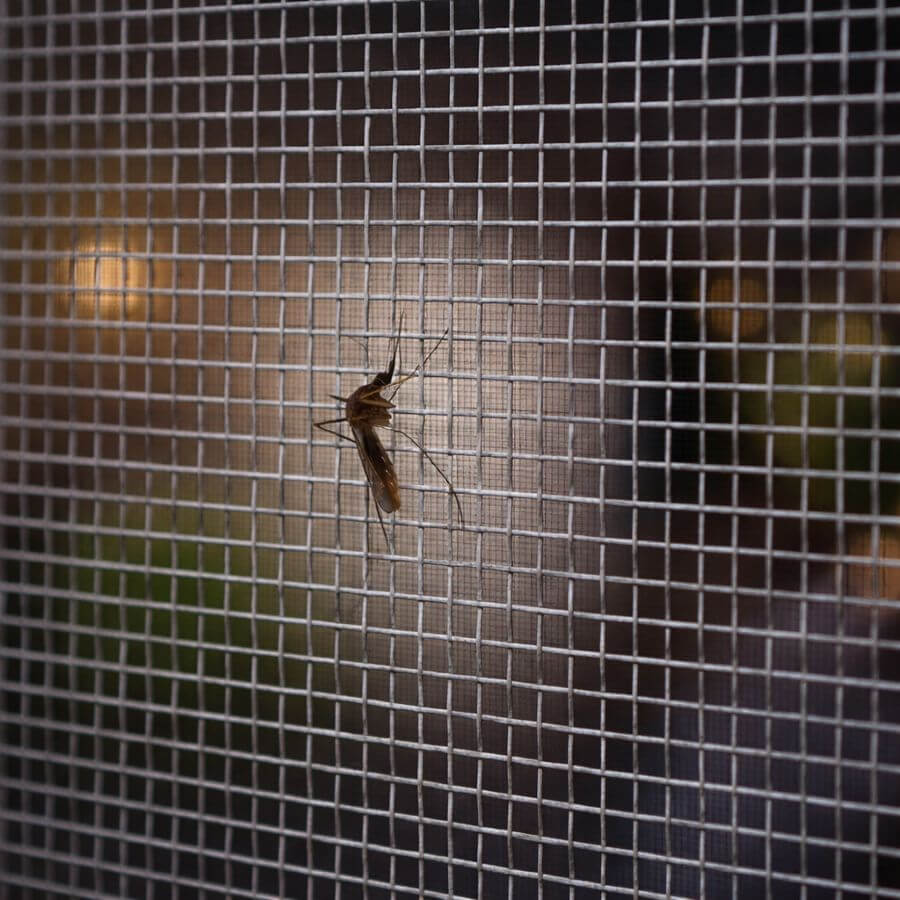
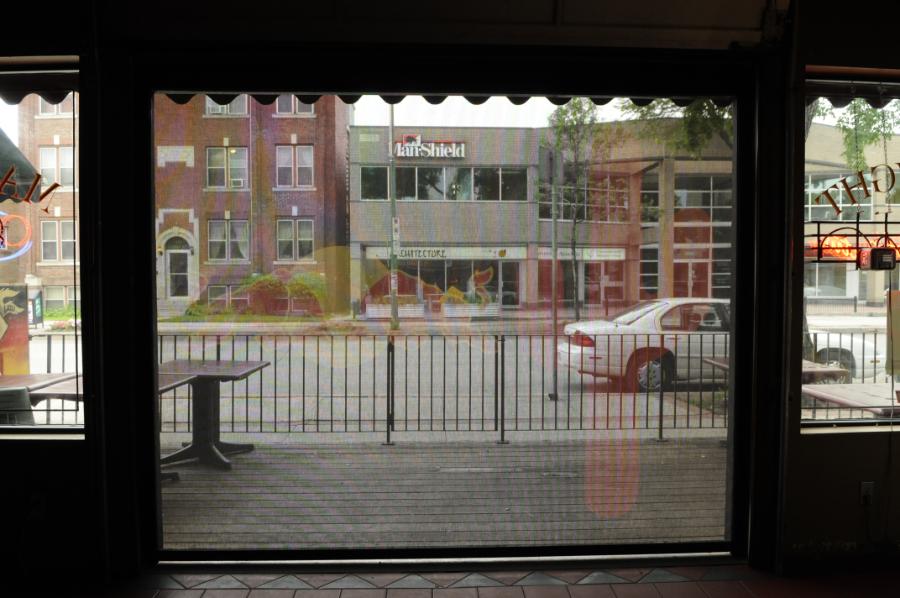
A mesh privacy screen doesn't block sightlines. It manages them using light. Mesh works on a light differential: you see clearly from the darker side into the brighter side, and the reverse view is a flat, opaque panel. During the day, the outside is bright and your covered patio is comparatively dark, so you get a clear view out while passersby see nothing. That's the effect you saw in the showroom, and it's real. Phifer, one of the industry's largest mesh manufacturers, confirms the same mechanism: daytime privacy comes from that light differential, and it reverses once the sun goes down.
After sunset, the differential flips. Turn on your patio lights and the outside goes dark — now you're the bright side. The exact same fabric that hid you at 2 p.m. renders you in silhouette at 9 p.m. This isn't a manufacturing defect; it happens with every mesh screen from every manufacturer. What varies is how much detail leaks through, and that's governed by openness factor — the percentage of the weave that is open space.
Here is the actual fabric menu we order from, with the openness factor and UV blockage for each. This isn't a generic industry chart — it's what you can actually specify on a screen from us, and it's worth seeing before you talk to anyone:
| Fabric | Openness | UV blocked | Daytime privacy | At night, lights on | Max width |
|---|---|---|---|---|---|
| TuffScreen (Phifer) | 45% | 55% | None — it's an insect mesh | None | 120" |
| SunTex 90 (Phifer) | 10% | 90% | Moderate | None | 120" |
| SunTex 95 (Phifer) — what we fit as standard | 5% | 95% | Good — rated “daytime privacy” | Silhouettes and movement readable | 120" |
| SheerWeave 4800 (Phifer) | 1% | 99% | Very strong — the only one rated “day/night privacy” | Soft silhouettes at most | 120" |
| Soltis Proof 502 (Serge Ferrari) | 0% — true blockout | 100% | Total | Total | 70.8" |
Read that table and the honest version of our own sales pitch falls out of it. The fabric we fit as standard is SunTex 95 — 5% openness — and it is rated for daytime privacy. Not day/night. That's the manufacturer's own classification, not our hedge, and it's the right fabric for most openings. But if what you actually want is privacy after dark, it is a different fabric and it costs more: SheerWeave 4800 at 1% is the only mesh on the menu rated for day/night privacy. Soltis Proof 502 is true blockout. Both are a paid upgrade over the standard mesh, so ask for the difference in writing when you get quoted. If someone tells you a standard 5% mesh gives you night privacy, ask them for the manufacturer's rating.
Two catches worth knowing before you decide. Soltis Proof 502 maxes out at 70.8" wide — under six feet — while everything else runs to 120". Plenty of patio bays are wider than that, so “just get blockout” often isn't actually on the table, and SheerWeave 4800 becomes your night-privacy option by default. And openness factor is not opacity: PanoramaFR, the clear vinyl used on Habitat Clear enclosures, is also 0% openness and you can see straight through it. 0% means no air passes — not that no light does.
The cheapest fix is the one nobody mentions: move your lighting. Overhead fixtures behind you turn you into a backlit stage; low, warm, downward-aimed lighting mounted outboard of the screen line cuts what reads through the mesh far more than fabric choice alone. Darker fabric colours also tend to improve your outward view and reduce glare, which is a common practical reason installers steer buyers toward anthracite or black over lighter tones. Vancouver-based Talius has a good technical breakdown of what each openness tier trades away, and Phifer publishes the full SunTex spec if you want the raw numbers. For layout and lighting ideas beyond the screen itself, see our patio privacy screen design guide.
Do Privacy Screens Provide Security, or Just Privacy?
Just privacy — and you don't have to take our word for it, because the people who make the fabric say the same thing. Every screen fabric on our supplier's menu is rated for the same five jobs: solar protection, weather protection, insect control, ventilation, and privacy. Security is not on that list. Not for any fabric, at any openness factor, at any weight. The same manufacturer sells entirely separate products for intrusion resistance — end-retention hardware and vandal panels — precisely because mesh isn't one.
The spec numbers back it up. SunTex 95 is rated 350 lbs/in warp and 235 fill — but that is tear strength, which measures resistance to a pull. Nothing in the specification addresses cutting, because a polyester-and-vinyl mesh doesn't resist it: a utility knife opens it in seconds. If an installer quotes you mesh and calls it security, ask them for the manufacturer's intrusion rating. There isn't one.
What a screen does provide is concealment, and concealment has honest deterrence value. Opportunistic property crime is largely a sightline crime — people take what they can see. A screened patio removes the view of your barbecue, bikes, tools, and furniture from the street and the laneway. That's real, and it's worth something, but it's categorically different from physical resistance.
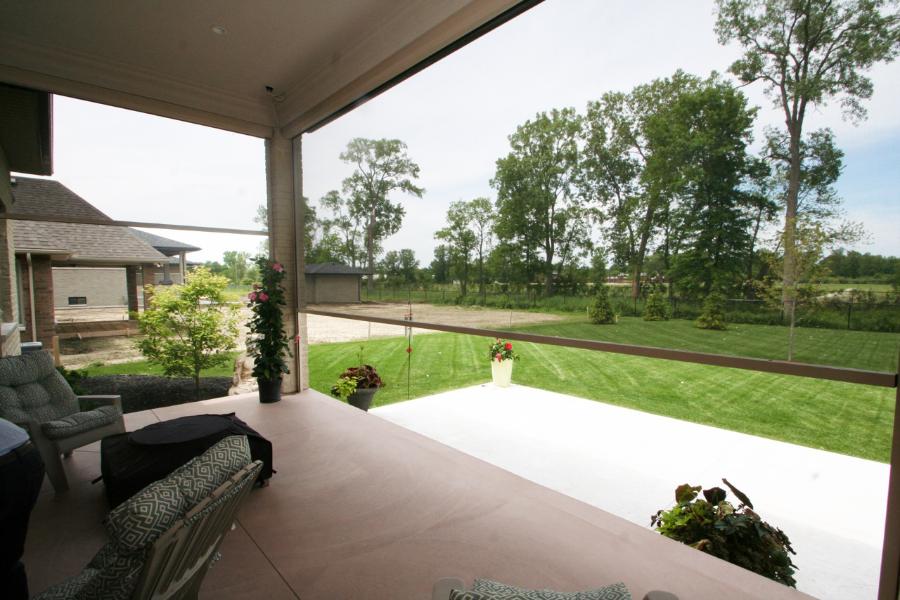
- Want to stop being watched, and keep airflow? A retractable privacy screen is the tool.
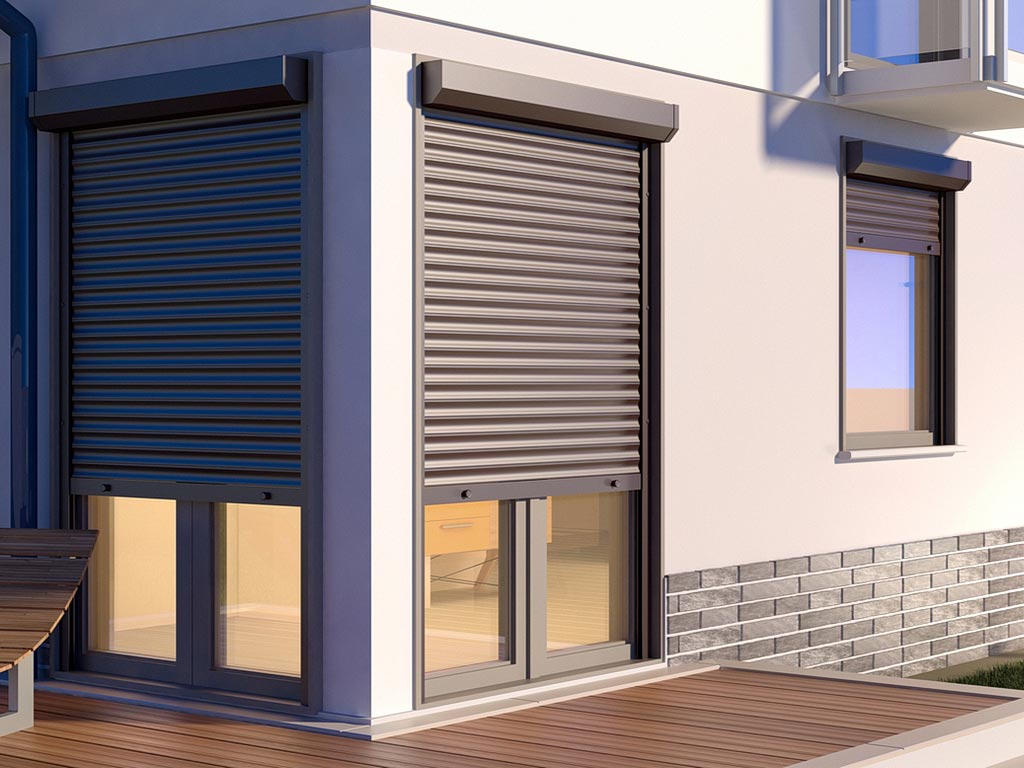
- Want to stop someone getting in, or protect glass and stock? A roll-up security shutter or side-folding grille — a solid aluminum system, not mesh.
- Want both? They coexist on the same opening: screen down through the season for concealment and insects, shutter down when the property is empty. This is a common pairing on restaurant terraces and laneway garages. For a permanent option that covers both jobs from one panel, see our metal privacy screens.
What Do Retractable Privacy Screens Cost in the GTA?
Installed, a single patio or deck screen generally runs somewhere between $1,200 and $4,000 depending on width and whether it's motorized. Full gazebo enclosures and commercial restaurant terraces go up from there. Our retractable screens page carries the current ranges by configuration if you want the breakdown.
Beyond width and motorization, price moves on fabric spec and site conditions — what you're anchoring into, and how far the power run is. Night-privacy fabric is a paid upgrade over the standard mesh. Every screen is custom-measured and custom-fabricated to one opening, so the only figure that means anything is a written quote against yours.
Most residential installations are completed in a single day. Typical lead time is 2–4 weeks from confirmed order, since every screen is measured and fabricated to your exact opening — nothing is off-the-shelf.
Can Retractable Screens Stay Up Through an Ontario Winter?
The fabric and the aluminum don't mind the cold. The mechanism minds water. So our advice is narrower than the “put them away for winter” line you'll hear elsewhere: retract dry, before the freeze. Not simply “roll it up for the season” — roll it up while it is dry, and don't roll up a wet curtain at all.
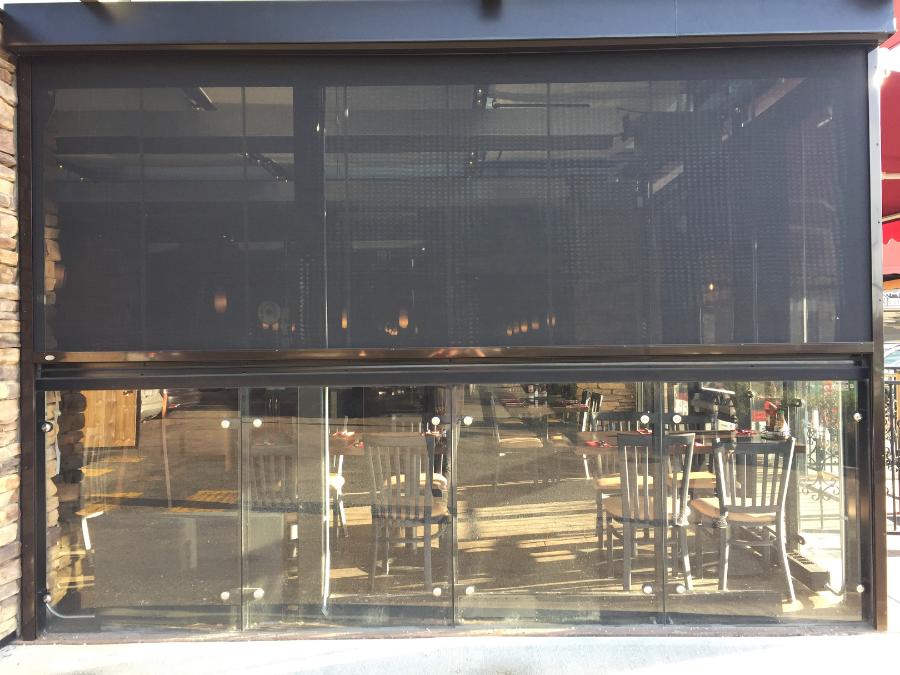
That distinction matters, because rolling a wet curtain into a closed housing is the failure most people create by accident. Our supplier's care and warranty documentation for its Habitat Clear enclosures is explicit on both points: never retract the curtain into the panel box when wet, and don't operate it at all when it's covered in snow, ice, or debris. Those particular documents cover the vinyl product rather than mesh — there is no mesh-specific care sheet we can point you to — but it's the same roller, the same housing, and the same failure. Treat it as the safe assumption, not a technicality.
For its rollshutters, the manufacturer's documented winter position isn't “retract for the season” either — it's inspect before you operate. Clear frost and snow off first, stay within line of sight while it runs, and if the curtain resists, stop rather than forcing it. Freezing can't be engineered out of an exterior product; the defence is looking before you press the button. Fabric that has bonded to the roller or iced into the side guides will tear, or the motor will strain against a load it cannot read. Freeze-thaw cycling — the GTA's specialty — is harder on a system than a steady cold snap. And a deployed screen has no meaningful snow-load rating: it's a vertical membrane, not a roof.
Wind is the other seasonal question, and the honest answer varies by width and fabric rather than being one number that applies to every screen. As a general guide, Solaris Canada's maintenance guidance for motorized retractable screens recommends retracting above roughly 40 km/h and avoiding operation in sub-zero temperatures — ask your installer for the specific rating at your width before you order, since a wider opening tolerates less wind than a narrow one in the same fabric. If your patio catches prevailing wind, or the screen is motorized and the property is sometimes empty, add a wind sensor that auto-retracts above a set threshold.
Retractable vs. Fixed Privacy Screens: Which Actually Wins
| Retractable | Fixed / permanent | |
|---|---|---|
| View when not needed | Fully restored — hardware disappears into the housing | Permanent obstruction |
| Winter | Retract and forget | Exposed year-round |
| Privacy consistency | Only when deployed | Always on |
| Moving parts | Motor, roller, sensors — serviceable items | Essentially none |
| Wind survival | Retract to eliminate the load | Must be engineered for full load |
| Cost | Higher up front | Lower for equivalent coverage |
Go retractable when the view matters some of the time, when the opening is exposed to wind, or when the space is seasonal — which covers most GTA patios and nearly every restaurant terrace. Go fixed when you're screening one permanent eyesore, a specific neighbour sightline, or a mechanical/bin area where nobody will ever want the view back. For that permanent case, our metal privacy screens hold up without a motor to service.
Quick Answers
- Can you see through a mesh privacy screen at night? Yes. Once the brighter light source is on your side of the fabric — patio lights on, sky dark — the daytime effect reverses and you're visible in silhouette. It's physics, not a product flaw, and it happens with every mesh screen regardless of brand.
- Do privacy screens still give you privacy after dark? Only if you specify for it. A 1% mesh or a true blockout fabric keeps real concealment after sunset; the 5% mesh most installers fit as standard does not, and is rated for daytime privacy only. Nothing woven gives you daytime-level privacy at night without also cutting your own view and airflow. Lighting placement — low, warm, aimed away from the fabric — closes most of the remaining gap.
- What openness factor gives the best privacy? There's no single best factor — it's a trade-off, and the useful rungs are fewer than you'd think. 5% is the middle ground: good daytime privacy, clear view out, readable silhouettes at night. 1% is the step that buys genuine night-time concealment, at the cost of airflow and outward visibility. 0% blockout is total, but you lose the view entirely and the widest blockout panel is under six feet. Anything at 10% or above is functioning as shade, not privacy.
Before You Book a Privacy Screen Quote
The useful test of an installer is whether they'll tell you what their product doesn't do. If someone quotes you mesh and calls it security, or promises night-time privacy without mentioning your lighting, you've learned something about them. Ask any installer — us included — for the openness factor, the wind rating at your specific width, and what happens in February.
If you're still comparing physical security options for the same opening, our roll-up shutters vs. window film comparison walks through the same buy-this-not-that logic. And if you want to talk through a specific opening, we measure on site as CANASA members, and we'll tell you honestly when a screen is the wrong answer and a shutter is the right one.