 CANASA Member
What Are Insulated Roll-Up Doors?
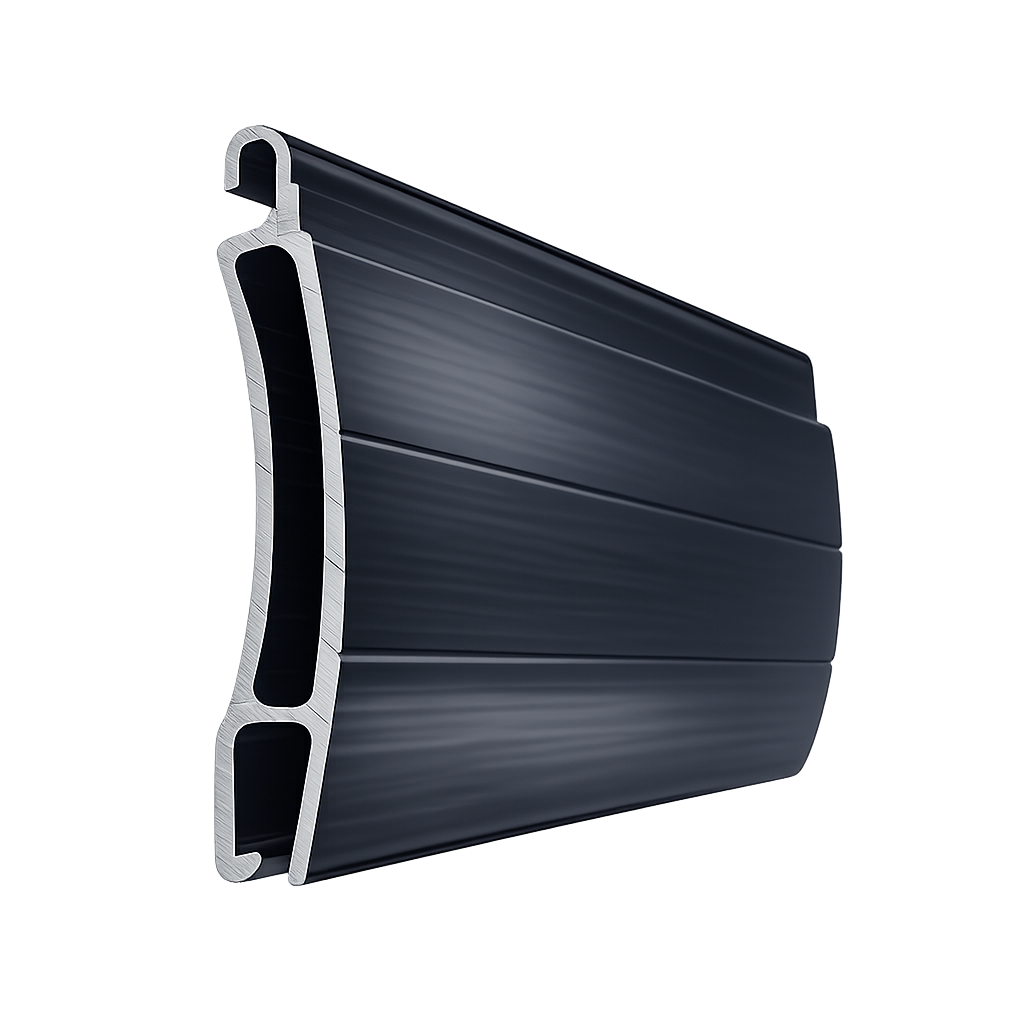
You're putting a roll-up door on a backyard workshop you plan to heat through January, and the quote lists two slat options that look identical from the yard. The difference is inside the slat. Insulated roll-up doors use foam-filled aluminum slats: an aluminum shell with a rigid foam core. Non-insulated doors use single-wall aluminum slats, or hollow double-wall slats with nothing inside.
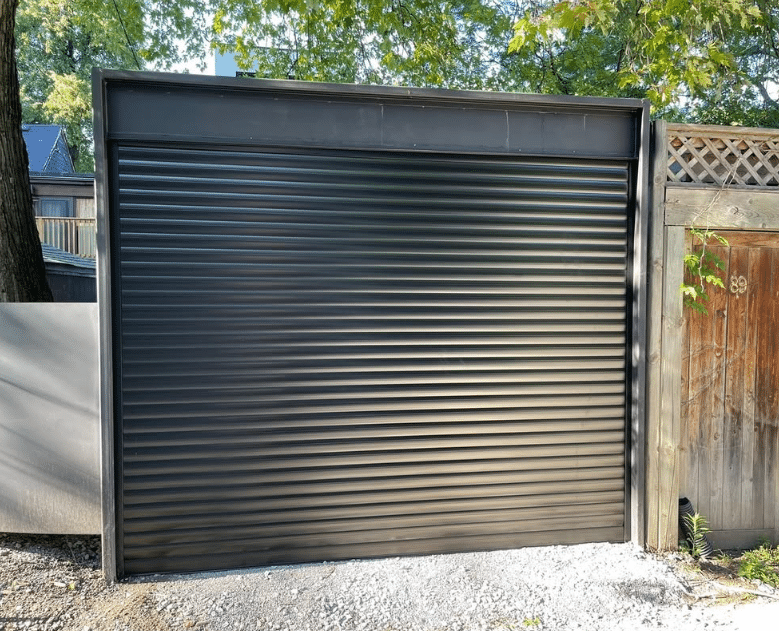
From the outside, both are interlocking aluminum slats in reinforced side guides, and both lock when closed. The foam core adds an insulating layer across the opening; ask for the profile's rated insulation value on the quote if it matters for your space. It also makes the slat thicker than a single-wall slat, and that one change affects the housing size, the headroom you need and how the door is driven.
Talius, the Canadian manufacturer whose shutters we install, lists its roll shutter profiles with polyurethane foam or hard resin cores. The single-wall and double-wall extruded profiles on our list have no core at all.
Single-Wall vs Double-Wall vs Foam-Filled Slats Compared
Single-wall is the simplest and least expensive, hollow double-wall is stiffer at a moderate cost, and foam-filled is the only one of the three that is insulated. Here is how they compare on the points that matter for a shed, workshop or garage.
| Single-wall | Double-wall (hollow) | Foam-filled (insulated) | |
|---|---|---|---|
| Construction | One wall of extruded aluminum, no core | Two extruded aluminum walls with an empty chamber between them | Roll-formed aluminum shell filled with rigid foam |
| Insulated? | No | No. The hollow chamber is not a foam core | Yes. Adds an insulating layer across the opening |
| Coil and housing | Smallest coil, smallest housing box | Larger coil than single-wall | Larger coil than single-wall, so a larger housing box |
| Weight | Depends on profile and gauge | Depends on profile and gauge | Depends on profile and gauge |
| Feel and sound | Thinnest slat; sounds the most metallic as it runs in the guides | Stiffer across the width than single-wall | Foam core damps the ring of the aluminum; feels solid when you knock on it |
| Relative cost | Lowest of the three | Middle | Highest of the three |
| Typical use | Storage sheds, storefronts, interior partitions | Workshops, storefronts, industrial openings | Heated workshops, attached garages |
Weight is the row we won't generalize. It depends on the profile and the gauge of the aluminum, not only on whether there is foam inside, so the spring or motor is sized to the actual curtain you choose.
When Are Insulated Roll-Up Doors Worth It?
Insulation is worth paying for when the space behind the door is heated, or when you spend real time in it between November and March. If the building is never heated, the foam core has little to do.
- Heated or semi-heated workshops. You run a heater while you work, and the door is the largest single surface on that wall.
- A garage attached to the house. It shares a wall with your living space, and insulated profiles are a common choice there.
- Spaces you work in through the winter. A woodshop, a car you work on over the winter, a home gym in the garage.
- Air moves at the edges, too. The slat is one layer. Ask what seals come with the side guides, bottom bar and housing, because an insulated curtain with gaps at the edges still has gaps.
When Is a Non-Insulated Roll-Up Door Enough?
For an unheated building, a non-insulated door is usually the right call. It costs less, the coil and housing are smaller, and it closes and locks the opening the same way.
Choosing between the two non-insulated types: double-wall is stiffer across the width, and single-wall is the more economical of the two. Neither is insulated, and the empty chamber in a double-wall slat is not a substitute for foam.
- Unheated storage sheds. Mower, bikes, garden tools. The shed sits at outdoor temperature whatever the door is made of.
- Boathouses used seasonally. The building isn't heated and stays closed for the off-season.
- Detached garages used only for parking or storage. If nobody heats it or works in it, put the budget into the profile and the motor instead.
What Does an Insulated Slat Change About the Door?
A thicker slat rolls into a bigger coil, and a bigger coil needs a bigger housing box above the opening. That is the main practical trade-off, and it matters most where the header is low.
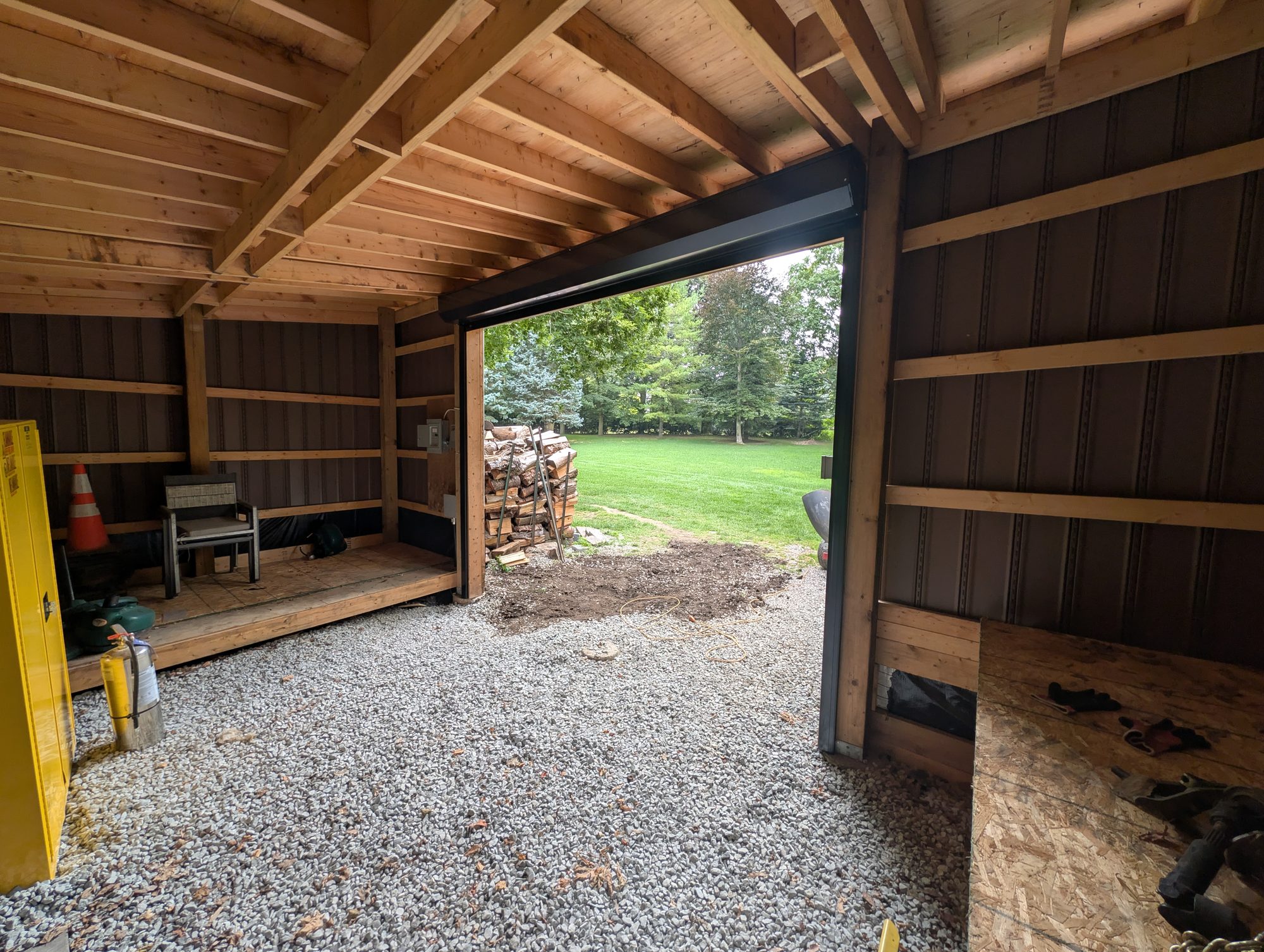
- Housing and headroom. The curtain coils into a housing mounted above the opening. A larger coil needs more clear height above the opening, or the box covers part of the opening. We measure this at the site visit, not from a photo.
- Motor and spring sizing. The motor or the spring is matched to the weight and width of the curtain. Change the slat and the drive is re-sized with it.
- Size limits per profile. Our specifications page lists the foam-core Standard profile at up to 11 ft wide by 9 ft high and Medium-Duty at up to 14 ft by 10 ft. A wider double garage moves to the Heavy-Duty or Area Door profile; Talius lists its large area-door profile as foam-insulated.
- Cost. Foam-filled slats cost more than either non-insulated type, and the difference shows up as its own line on the quote.
Manual or Motorized for an Insulated Roll-Up Door?
Use a spring-assisted lift on a shed you open a few times a month and a motor on a door you open every day. The slat type doesn't change that rule; it changes what the spring or motor is sized for.
- Spring-assisted lift. A torsion spring inside the barrel counterbalances the curtain, so you lift and lower the bottom bar by hand. No wiring, which suits a storage shed with no power.
- Motorized. A Somfy tubular motor inside the barrel, run from a remote or wall switch. The usual choice for daily-use workshops and garages.
- Manual override. Every motorized door we install has a crank so you can open it by hand if the power is out.
How Much Do Insulated Roll-Up Doors Cost?
Installed, shed and workshop roll-up doors typically run $1,000–$2,500, and roll-up garage doors typically $1,500–$3,500 per door. Foam-filled slats cost more than single-wall or double-wall. We don't publish a fixed upcharge because it depends on the width and height of the opening; it is itemized on your written quote.
Whoever you get quotes from, ask for these items in writing so the quotes can be compared line by line. If you are still deciding between a roll-up and a sectional door in the first place, start with our benefits of roll-up garage doors.
- The slat profile by name, and whether it is foam-filled
- The housing box size and where it mounts
- The operation: spring-assisted, or which motor, plus the manual override
- The seals at the side guides and the bottom bar
- The warranty: ours is 1 year on labour and installation; Talius gives an up to 10-year limited manufacturer warranty on parts
Which Slat for Which Building?
Match the slat to whether the building is heated, and the operation to how often you open the door. This is where we usually start the conversation at a site visit.
| Building | Slat we'd usually start with | Operation | Why |
|---|---|---|---|
| Storage shed, unheated (shed and workshop doors) | Single-wall or double-wall | Spring-assisted lift | Nothing inside to keep warm; smaller coil and lower cost |
| Heated workshop | Foam-filled | Motorized | Heated and used through the winter, opened most days |
| Attached garage (roll-up garage doors) | Foam-filled | Motorized | Shares a wall with the house and opens every day |
| Laneway garage | Foam-filled if heated or used as a workspace; non-insulated if it only holds a car | Motorized | Decided by use; check the header height for the larger coil first |
| Boathouse used seasonally (boathouse doors) | Non-insulated where the span allows | Motorized or spring-assisted | Unheated and closed for the off-season; very wide openings may need the area-door profile, which is foam-filled anyway |
If your building doesn't fit a row, describe how you use it when you book a free onsite measurement and we will quote insulated and non-insulated slats side by side.