 CANASA Member
Closing Up the Cottage for Winter: The Closing-Day Checklist for Openings
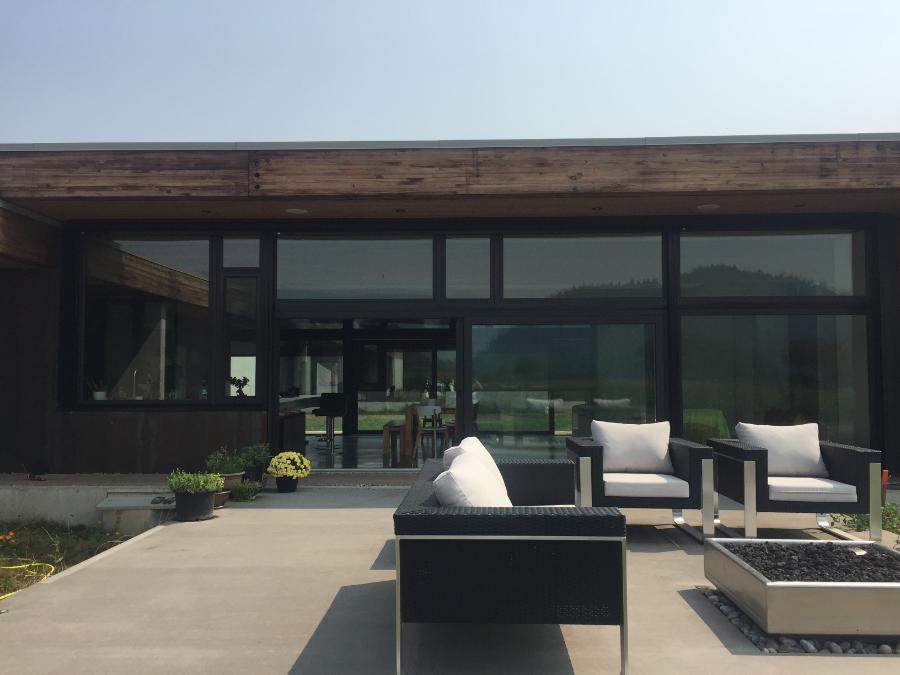
It's the last weekend before the road gets snowy. The docks are out, the water is cold, and in a few hours you'll lock a building with a wall of glass facing the lake and nobody around until May. Closing up the cottage for winter usually means the water lines, the pump and the fridge. This checklist covers the part people rush at the end: the openings.
The short answer: walk the building once, inside and out, and close, latch, bar or lock every opening, move outdoor gear indoors and out of sight, then photograph each opening before you leave.
- Windows: close and latch every one, including the bathroom window and any basement or crawlspace hoppers. Check from outside too; a latch that looks closed from inside sometimes isn't seated.
- Patio doors: lock each one, then drop a bar or a dowel cut to length into the inside track of every slider so the moving panel can't travel.
- Blinds and curtains: close them on the lake side and the road side so the rooms behind the glass aren't on display all winter.
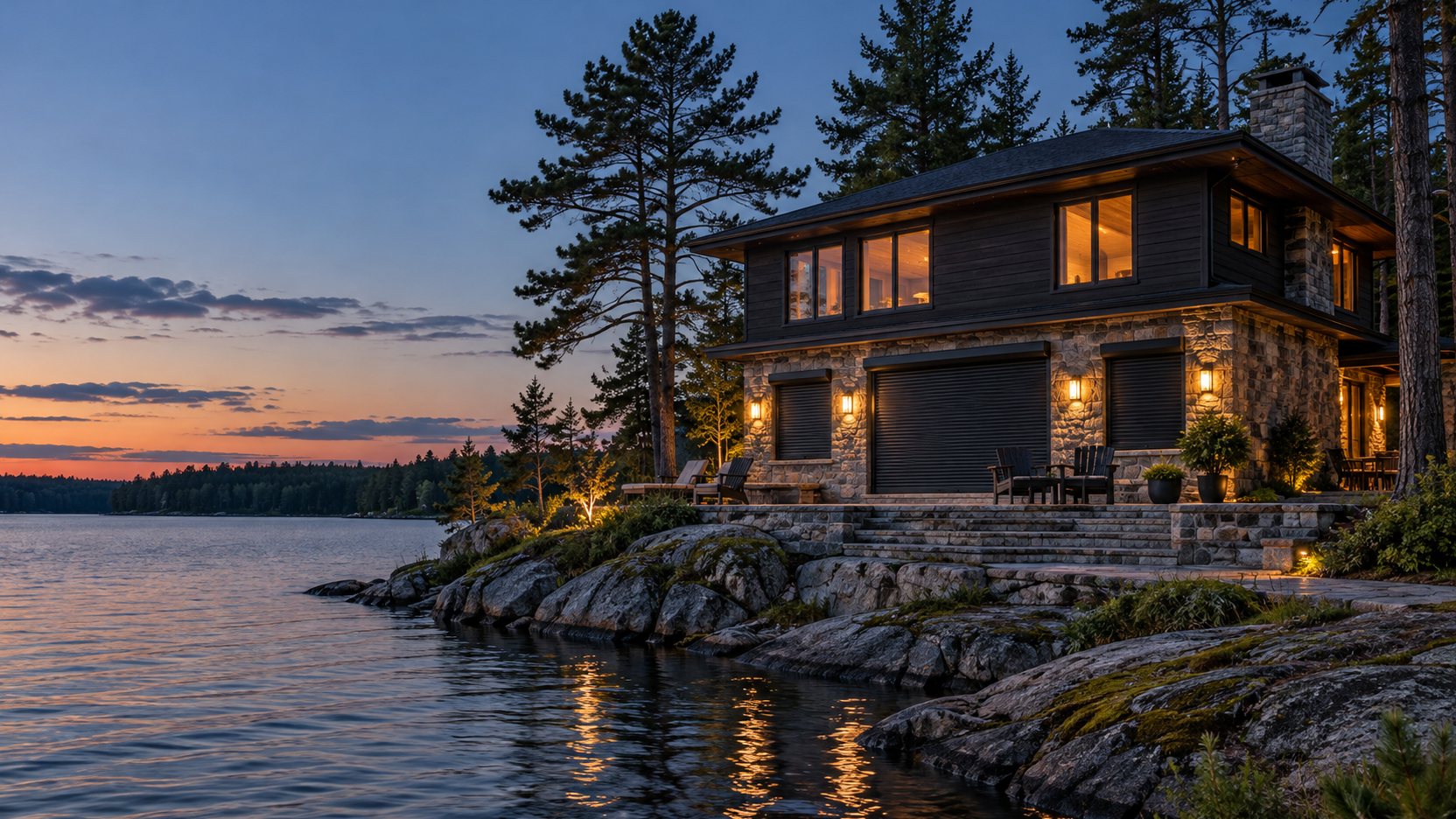
- Boathouse: close and lock the land-side door and the water door. If the water door is a roll-up, lower it fully and check the bottom bar sits on the sill, not on a fender or a dock line.
- Shed and bunkie: close the windows and lock the doors, then check the hinges and hasps are still tight after a summer of use.
- Outdoor gear: move furniture, the barbecue, kayaks, paddles, tools and the generator indoors, ideally into a room or building with no window onto them.
- Photos: photograph every opening from outside, closed and locked, with the date. In May you have something to compare against, and a record for your own files.
- Keys and controls: write down who has a key and where the shutter remote or crank rod is kept.
Already Have Roll-Up Shutters? How to Close Them for the Season
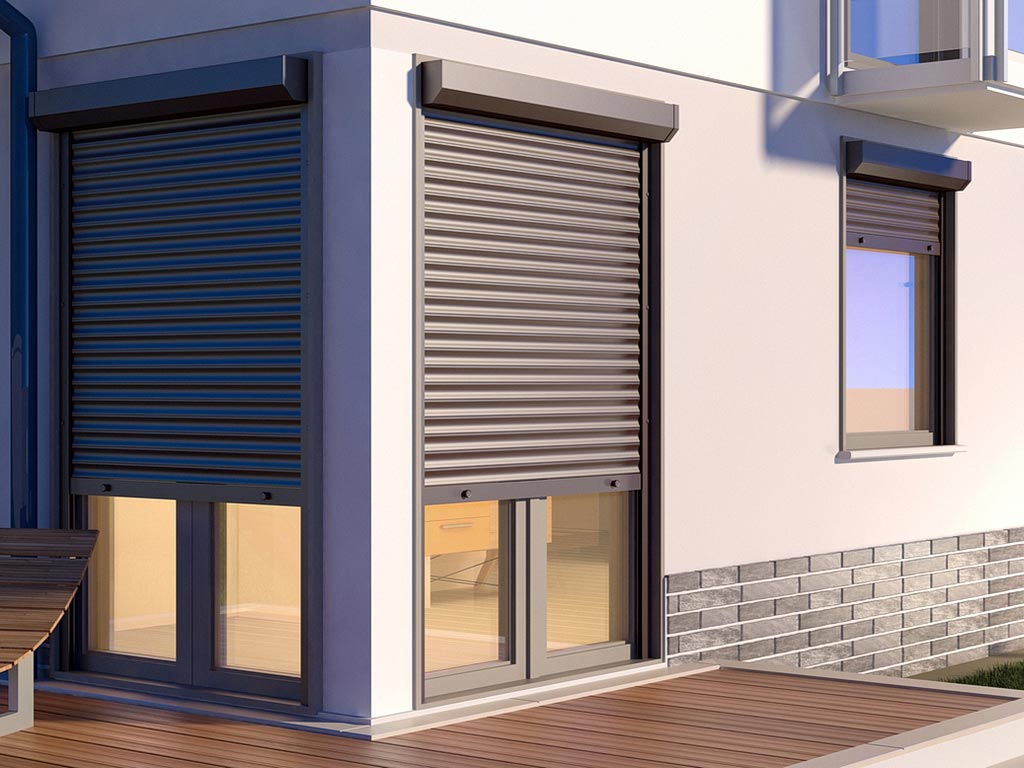
Close them onto a clear sill, close them fully, and leave the power in a state you chose on purpose. In spring, look at each shutter before you press anything.
Before you lower each curtain, sweep the sill and the bottom of both side guides clear of leaves, pine needles and grit. The bottom bar should sit flat on the sill; debris under it leaves a gap. If the slats are wet from overnight rain, close the shutter and leave it closed. The rule that matters is not rolling a wet curtain up into the housing, where water sits between the wraps and can freeze.
What you do with the power depends on how the shutters run:
| How the shutter runs | On closing day | Power off or on? | What that means |
|---|---|---|---|
| Somfy motor, remote or wall switch | Close each shutter fully and watch the bottom bar reach the sill | Off is fine once every shutter is closed | With the breaker off, the shutters stay where you left them and won't move until power is back |
| Somfy motor with Somfy TaHoma app | Close them, then check the app shows each one closed | Leave power and internet on | App control and schedules need both at the cottage. Without them, it works like a remote-only system you run on site |
| Solar motor package | Close fully and check the panel is clear and not shaded | Hydro doesn't matter; the panel charges the battery | A panel under snow does little charging, so clear it before you operate in spring |
| Crank rod | Close fully, engage any locks, then remove the rod | No power involved | Store the rod indoors where you'll find it in May |
In spring, don't run a curtain that is iced into its guides or frosted over. The manufacturer's winter guidance for its rollshutters is to inspect before operating, clear frost and snow first, stay within sight of the shutter while it runs, and stop rather than force a curtain that resists. On a cold April morning, the fix is often waiting until the afternoon sun has reached the guides. If a shutter has manual slide locks, release them before running a motor; Talius notes that manual sliding bars can damage the curtain if a motor runs against them.
Considering Cottage Security Shutters? Which Openings to Cover First
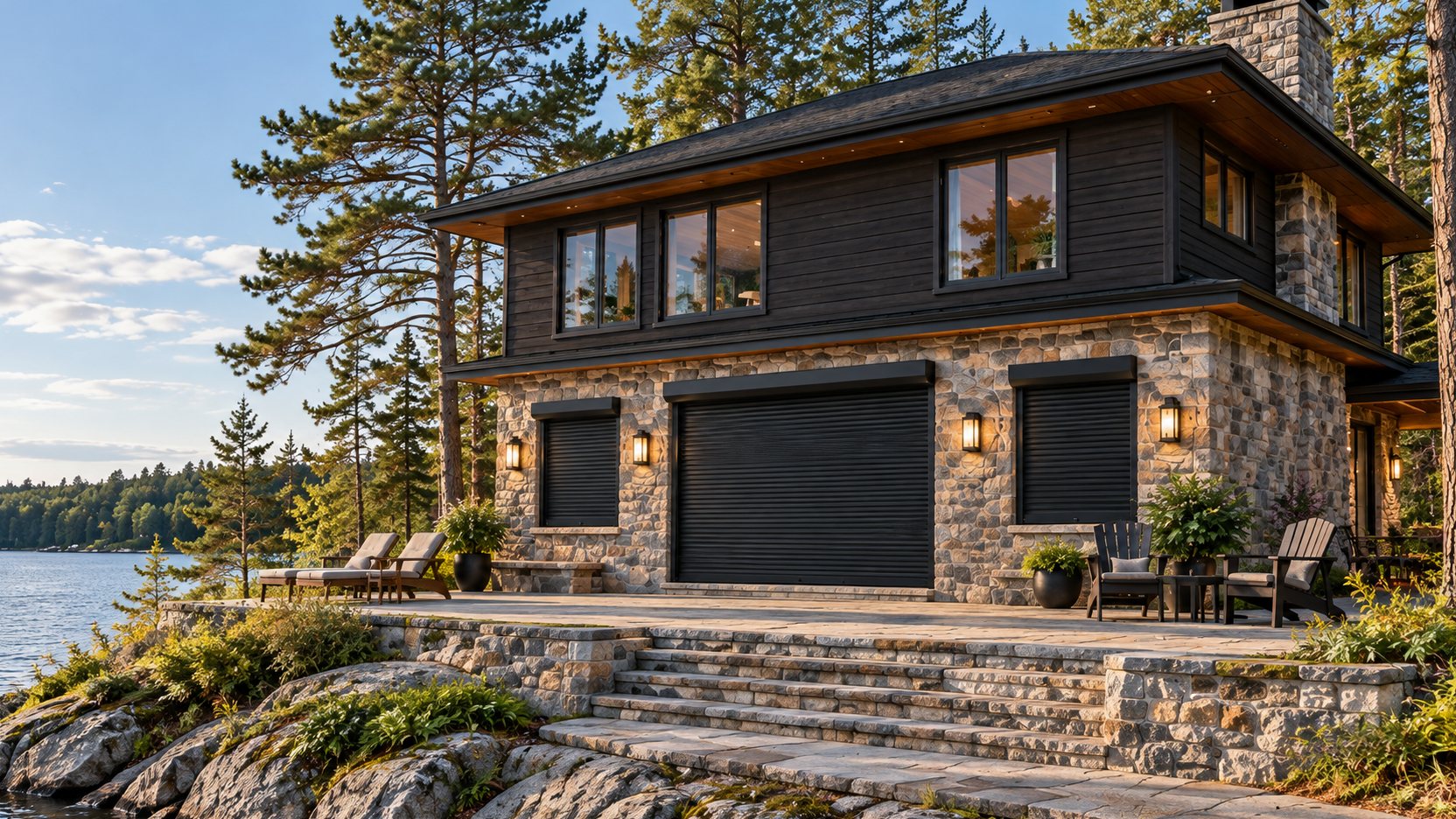
Start where the most glass is: the lake-facing patio doors and windows. Then the ground-floor windows you can reach from grade, then the boathouse and shed doors.
| Opening | Why it usually comes first | Typical installed price |
|---|---|---|
| Lake-facing patio doors | The largest single area of glass, usually on the side facing the water | From $1,900 per door |
| Lake-facing windows | Most of the cottage's glass is on this side; a closed shutter hides the room behind it | $800–$1,500 per window |
| Ground-floor windows on other sides | Reachable from grade, often out of view of the road | $800–$1,500 per window |
| Boathouse water door | Often the most remote building on the property; a roll-up closes the full opening | Quoted with the property |
| Shed or bunkie door | Holds the furniture and gear you moved in for the winter | Quoted with the property |
Why one visit matters. Cottage work is quoted per property, not per opening. The drive and the day on site are shared across every opening, so covering several openings in one visit lowers the cost per opening. We also group cottage-country trips by area, across Muskoka, the Kawarthas, Georgian Bay, Lake Simcoe and Haliburton. If you plan to add the boathouse in two years, it's worth pricing it now with the cottage.
Timing in November. Every shutter is made to its opening, and our published lead time is typically 2–4 weeks from order confirmation. Cottage-country installs are scheduled as grouped trips, so ask for the install window when you book. If the road stays open for a few more weekends, a fall install may still fit. If not, get measured on one of your last visits and book the install for spring, before your opening weekend.
Ask about cold-climate options while you're at it. Talius makes a Winterization Package for northern climates that reinforces the panel box and adds stoppers to the bottom profile, because cold changes the diameter of the rolled curtain. Ask whether it is included on your quote. See the patio door shutter and window shutter pages for sizes and examples.
No Reliable Hydro at the Cottage? Your Power Options
You have two options that don't depend on hydro: a crank rod, which needs no power at all, or a solar motor package, where a panel charges a battery that runs the motor. If the hydro is steady, a wired Somfy motor is the third option.
- Crank rod. No wiring, no battery, nothing to charge. You turn the rod to raise or lower the curtain, and the rod detaches so you can store it indoors. It suits a building you close once in the fall and open once in the spring.
- Solar motor package. A small panel above the housing charges a battery that powers the motor, and you run it by remote just like a wired motor. It suits boathouses without shore power and outbuildings far from the electrical panel. Ask for the battery's rated daily cycles and how it behaves after a run of grey days.
- Wired Somfy motor. Remote, wall switch or app control. It's the right fit when the cottage has steady hydro year-round. If outages are common where you are, consider a crank or solar package for the openings you most need to operate.
- Mix them. One property doesn't need one system. Motorized on the main cottage, solar on the boathouse and a crank on the shed is a reasonable split.
What to Send Before a Cottage Shutter Quote
A quote from photos and rough sizes is quick to prepare, and it tells you whether a site visit is worth booking before the road closes. Send the following with your quote request:
- A photo of each opening from outside, taken straight on
- Rough widths and heights, and which side of the building each opening faces
- How the property is powered: year-round hydro, seasonal hydro, shore power at the boathouse, or none
- The nearest town or lake, and the dates your road is usually open
- Which openings you want covered now and which you might add later