

 Made in Canada
What Are the Options for Covering a Storefront After Hours?
There are three: a roll-up shutter that coils into a housing above the opening, a side-folding grille that slides sideways into a pocket beside it, and a counter shutter for service windows and kiosks. All three put a physical barrier over the glass and entrance when the store is closed and are out of the way during business hours.
- Roll-up shutters: solid, perforated or grille curtain; need room above the opening. Usual fit: standalone shops, restaurants, street-level frontages.
- Side-folding grilles: no ceiling space or floor track needed, and you can see through them. Usual fit: mall units and wide or folding glass frontages.
- Counter shutters: service windows, bar tops, concession stands and kiosks.
- Storefront roll-up shutters typically run $2,500–$8,000 installed, depending on width, curtain type and motor.
When Is a Roll-Up Shutter the Right Choice for a Storefront?
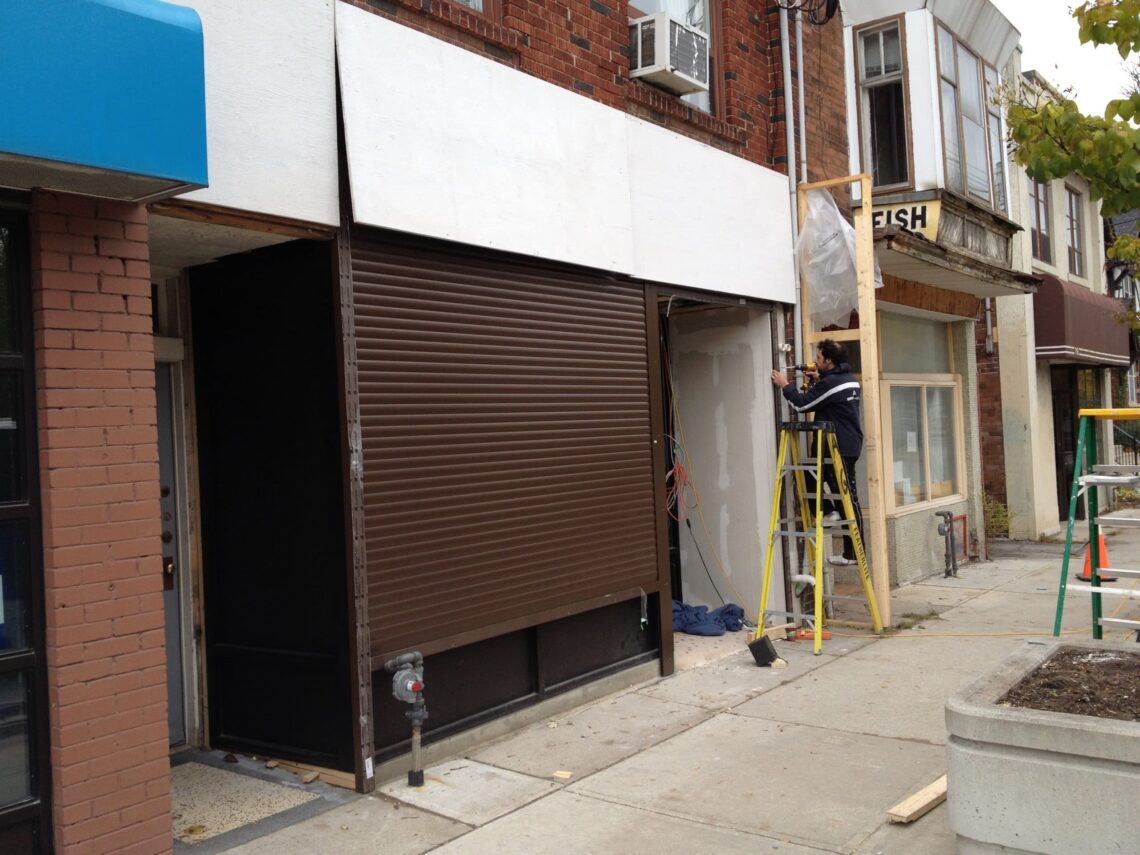
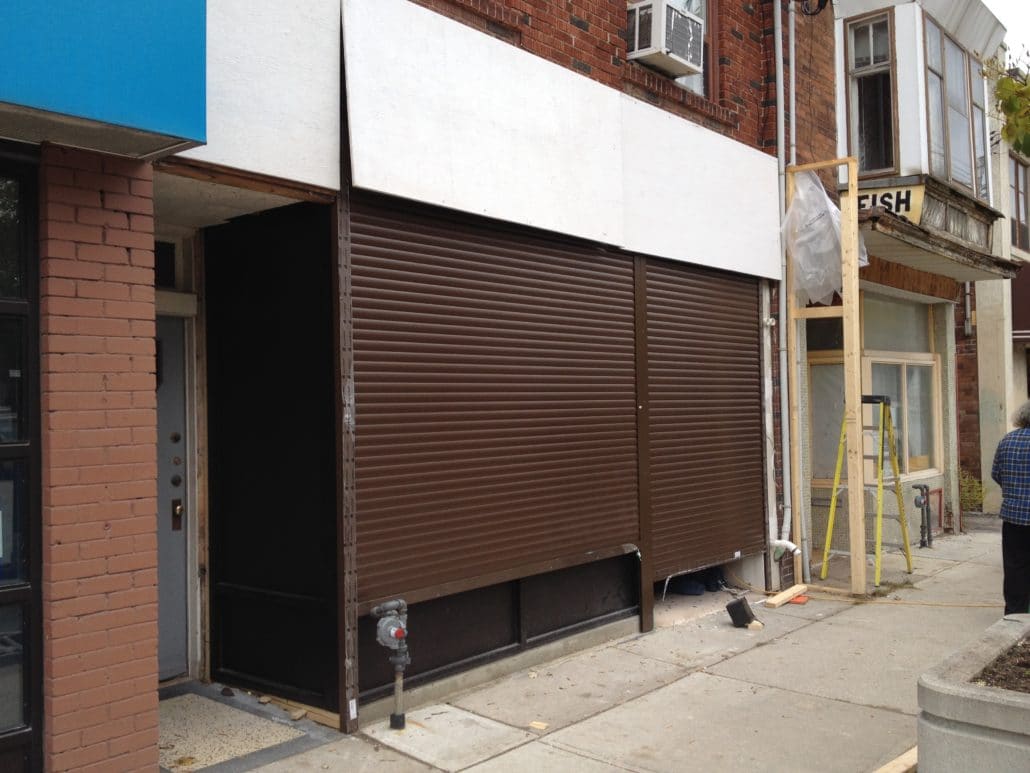
A roll-up shutter suits a street-level shop with room for a housing above the glass. Interlocking aluminum slats run in side guides and coil into the housing when the shutter is up, so the frontage is clear during the day. The curtain can be solid, perforated or a grille pattern, so you choose how much of the interior shows after hours. See storefront roll-up shutters.
Most commercial shutters are motorized and run from a wall switch or remote, and timer options are available on commercial systems. A manual crank suits smaller openings used less often.
When Is a Side-Folding Grille the Better Fit?
Side-folding security grilles hang from a top track, need no floor track, and fold into a compact side pocket. The open design keeps the store visible when it's closed, which is why jewellery and electronics retailers often choose them.
Grilles are common in malls, airports and mixed-use buildings where the landlord requires visibility through security closures. Curved tracks can follow corners, S-curves and arcs, and panels come as see-through grille, solid or tempered glass.
Can People Still See Inside After Hours?
Yes, if you choose a see-through curtain. Besides solid slats, roll-up curtains come in perforated and grille styles, including small or large punched holes, clear polycarbonate links, and straight-bar or brick-pattern links. These close off the opening while leaving sightlines for window displays, interior lighting and security cameras. A solid shutter is the choice when you'd rather the interior not be visible. See roll-up security grilles.
What Closes Off a Service Counter or Kiosk?
A roll-up counter shutter. It is custom-fabricated to the opening, coils into a slim housing above it, and locks with a cylinder lock in the bottom bar or a padlock provision, depending on the configuration. Perforated slats allow airflow when it's closed. It is a common choice for service windows, bar tops, concession stands and kiosks.
What Does a Storefront Shutter Cost in the GTA?
Storefront roll-up shutters typically run $2,500–$8,000 installed. Width is the biggest factor, followed by curtain type (solid, perforated or grille), slat profile and whether it's motorized. Every opening is measured on site before we quote, and each opening is priced as its own line. For how the factors work on residential openings, see security shutter prices in Toronto.
What Should You Check Before Ordering?
A few things decide which product fits and how it's installed:
- Your lease or landlord: many leases and malls set rules on what can be mounted on the frontage and whether closures must be see-through.
- Space: room above the opening for a roll-up housing, or room beside it for a grille's side pocket.
- Power: an electrical supply near the opening for a motorized unit.
- Locking and access: how the closure will be locked and who holds the keys or remotes.